Westinghouse Pressure Washer Review: The Honest Take
A compact, lightweight electric washer that covers most home jobs well, so long as you take its headline pressure numbers with a grain of salt.

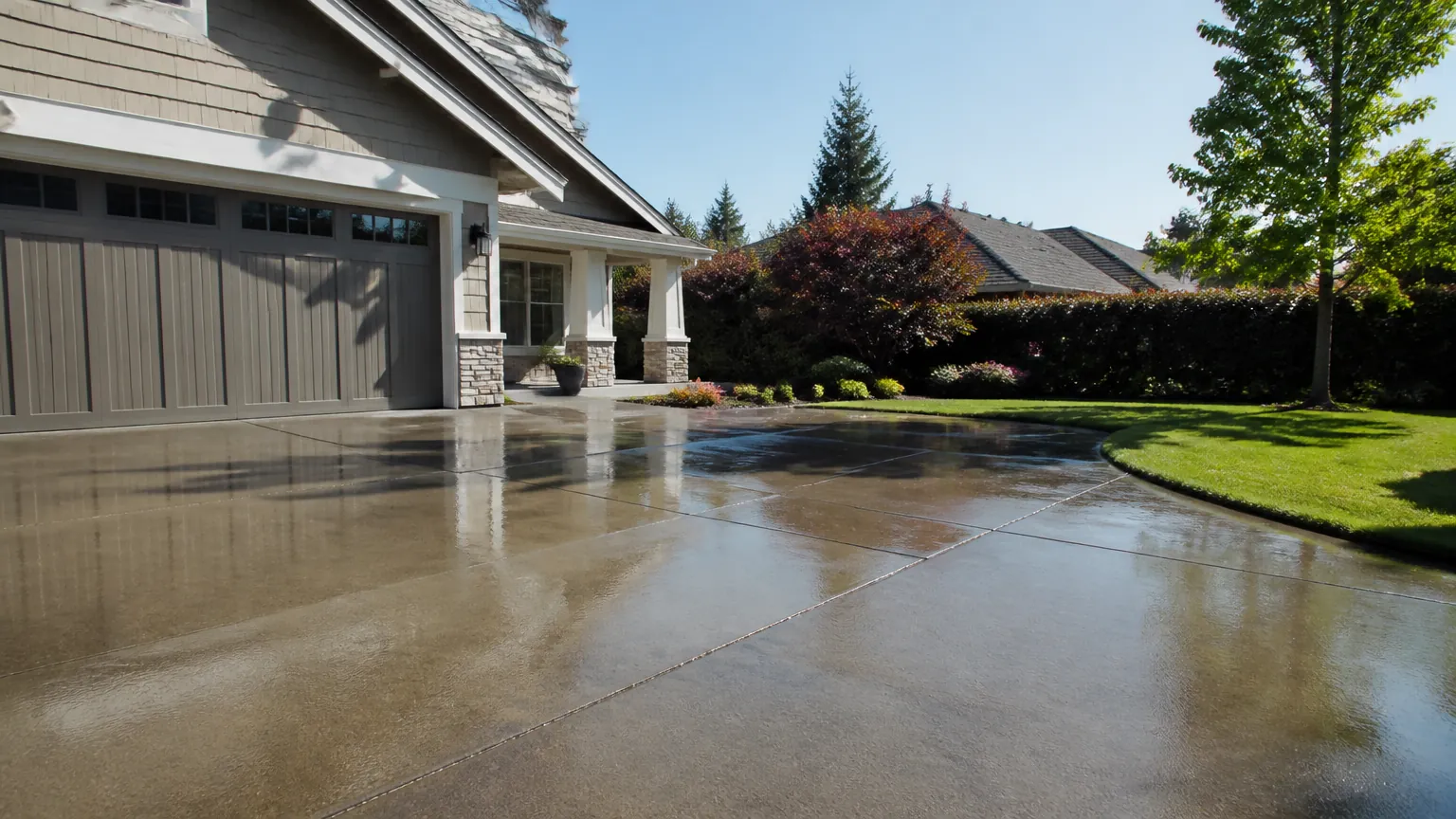
If you're reading this Westinghouse pressure washer review, you're probably weighing up the Westinghouse ePX3500 for everyday jobs around the house: the car, the patio, the driveway, maybe the fence and the garage floor. It's a corded electric, cold-water pressure washer aimed at homeowners rather than contractors, and its selling points are that it's small, light and quick to set up. To be clear up front: we have not tested this machine ourselves. This review brings together Westinghouse's own specifications and what owners and independent reviewers report, so you can see where the marketing ends and the real-world experience begins. I cover car and garage gear, so I'll also flag where a job is really better handled another way.
What you get
The ePX3500 is a compact electric pressure washer built around a 13-amp motor and an axial-cam pump. Westinghouse rates it at 2500 max PSI and 1.76 max GPM, but those two figures are measured under opposite conditions and never happen at the same time. The rated numbers (2000 PSI and 1.24 GPM) are a more honest guide to what it does in normal use, and one independent lab measured closer to 1,800 PSI and 1.06 GPM. It ships with a steel wand, five quick-connect nozzles and an onboard soap tank.
| Spec | Detail |
|---|---|
| Max pressure | 2500 PSI (at initial discharge, per CSA testing) |
| Rated pressure | 2000 PSI |
| Max flow | 1.76 GPM (without nozzle, at minimum pressure) |
| Rated flow | 1.24 GPM |
| Independently measured | ~1,800 PSI and ~1.06 GPM (TechGearLab) |
| Motor | 13 amp, 120 V |
| Pump | Axial cam |
| Water type | Cold water only |
| Weight | 19 lb |
| Dimensions | 13.5 L x 14 W x 16.5 H in |
| Hose length | 25 ft (nylon-braided) |
| Power cord | 35 ft with GFCI |
| Wand | 17.5 in pro-style extendable steel |
| Nozzles | 5 quick-connect (0°, 15°, 25°, turbo, soap) |
| Soap tank | 20 oz onboard |
| Safety | Total Stop System; trigger lock |
One warning about the model number: the "3500" in ePX3500 does not mean 3500 PSI. There is no 3500 PSI figure anywhere in the specs, and anyone shopping by model number alone could easily assume more power than this machine has. It's also easy to confuse with cheaper siblings: the ePX3100 (2300 max PSI), the ePX3100v (2100 PSI, with a detachable foam cannon instead of the onboard tank, and no wheels), and older ePX3000/ePX3030 versions. The separate WPX line (such as the WPX3400) are gas models and a different product entirely. Being a 120 V corded unit, this is a US-market machine; if you're in the UK or Australia, you'll want the local 230/240 V equivalent rather than this one with an adapter.
What owners like
For a budget home washer, the ePX3500 earns steady praise for the things that matter day to day: it's easy to move, easy to set up and quiet.
- Compact and very light: At about 16.5 inches tall and 19 lbs, owners and testers find it easy to carry between jobs and tuck onto a shelf. One reviewer contrasted it with a 77 lb gas Simpson unit.
- Easy, tool-free setup: Buyers repeatedly say assembly takes under about 10 minutes with clear instructions, and testers rated it as needing the least assembly of the units they tried.
- Strong enough for everyday home cleaning: Owners report good results on driveways, patios, fences, gutters, siding and vehicles, and one tester ran it on concrete for over an hour without it overheating or bogging down.
- Quiet, with no droning at idle: Because the Total Stop System shuts the motor off when you release the trigger, it's much quieter than a gas unit and doesn't hum between sprays.
- Stable four-wheel, anti-tip design: The wide, low base and four 360-degree lockable wheels make it easy to roll around and keep it steady on uneven ground, which reviewers appreciate given how light it is.
- Long power cord for the class: The roughly 35 ft GFCI cord gives more working range than most electric rivals, which helps offset the fairly short 25 ft hose.
- Complete nozzle set and onboard soap tank: It includes five quick-connect tips (including a turbo nozzle many rivals charge extra for) plus a built-in 20 oz detergent tank, which owners find handy for washing cars and pre-soaking.
Common complaints
None of these are unusual for a budget electric washer, but a couple are worth taking seriously before you buy.
- Real-world pressure below the headline numbers (common): One hands-on lab measured only about 1,800 PSI and 1.06 GPM, and reviewers point out the 2500 PSI and 1.76 GPM figures are measured under opposite conditions and never occur together. Expect solid home-grade cleaning, not professional grunt.
- Fiddly soap feature (some owners): Several owners found the soap applicator confusing or couldn't get the plastic soap nozzle to stay attached, and at least one gave up on the detergent feature altogether.
- Awkward hose connection and possible leaks (some owners): Buyers note the hose can be tricky to attach, the manual tells you to detach it after every use, and some report pinhole leaks developing in the high-pressure hose over time.
- Some parts feel plasticky, and the steel wand is heavy (some owners): A few reviewers say certain parts feel flimsy given the low overall weight, while the steel wand, though durable, is heavier than a plastic one and can tire your arm on long sessions.
- Won't-start or won't-stay-on failures (occasional): Scattered owner help threads describe units that won't power on, sometimes out of the box and sometimes after a couple of years, often tracing back to the power switch, the GFCI/reset, or the motor.
- Customer service can be frustrating (some owners): On a consumer-complaints site, Westinghouse owners across product lines describe slow responses and runaround on warranty claims, so support experiences appear uneven.
Running costs and upkeep
Running costs here are genuinely low. The motor is 13 amps at 120 V, so it draws roughly 1,560 watts (about 1.56 kW) while you're actually spraying. At a typical US rate near 17 cents per kWh, that works out to roughly 27 cents per hour of trigger time. Because the Total Stop System cuts the pump the moment you release the trigger, it only pulls that power while water is actually flowing, so real sessions usually cost less than the math suggests. UK readers can expect proportionally more at about 25p per kWh, and Australian readers around 30 Australian cents per kWh, though remember this specific 120 V model is for North America.
There are no required consumables beyond detergent if you choose to use the soap tank; the nozzles and hose are reusable. The big upkeep point from the manual is to store the washer indoors or somewhere heated so the pump doesn't freeze and crack in winter, and to test the GFCI on the cord monthly. The manual also advises detaching the hose after each use. No recall or official safety notice specific to the ePX3500 turned up in our sources.
On warranty, read carefully, because the paperwork doesn't quite agree with the box. Westinghouse advertises a 3-year limited service, labor and parts warranty for residential use (1 year commercial), plus lifetime technical support and a nationwide service network. However, the warranty document inside the manual phrases consumer parts-and-labor coverage as one year from purchase (90 days for commercial or income-producing use) and disclaims implied warranties. Given the uneven support reports above, it's worth reading the printed terms before you rely on the headline 3-year figure.
How it compares
These are the machines owners most often cross-shop against the ePX3500.
| Model | How it compares |
|---|---|
| Westinghouse ePX3500 | The lightest and most compact of the group, with a long cord, a full five-nozzle set and an onboard soap tank. Weaker on real-world pressure and build feel. |
| Sun Joe SPX3000 | A common "best for home" pick. Heavier (around 24–32 lb) with a shorter 20 ft hose and lower max pressure (~2030 PSI), but owners praise its value and storage. Some who tried both kept the Sun Joe. |
| Greenworks GPW2700 | The step-up electric option. More pressure (~2700 PSI) and far higher cleaning power for harder jobs, at a higher price. Choose it when you need more grunt than the compact Westinghouse offers. |
| Westinghouse WPX3200 (gas) | Rated much higher for raw cleaning power. Pick the ePX3500 over it only when portability and easy storage matter more than performance. |
Who should buy it, and who should skip it
- Buy it if you want a light, easy-to-store washer for routine jobs like cars, patios, fences and driveways.
- Buy it if storage space is tight and you don't want to wrestle a heavy machine off a shelf.
- Buy it if you value a quiet, quick-to-set-up electric unit with a full nozzle set included.
- Skip it if you need to strip stubborn grime, big slabs or paint-prep levels of pressure; a higher-output or gas unit will serve you better.
- Skip it if you want a long hose and don't want to detach it after each use.
- Skip it if you're buying on the model number expecting 3500 PSI, because it simply isn't that machine.
Our Westinghouse pressure washer review verdict
For most homeowners doing ordinary cleaning, the ePX3500 does the job it's designed for. It's light enough to carry one-handed, quick to assemble, quiet in use, and cheap to run thanks to the Total Stop System. The long cord, included turbo nozzle and onboard soap tank add genuine value, and owners generally report good results on cars, patios, fences and driveways. For a garage and driveway workhorse that lives on a shelf most of the year, it's a sensible, low-fuss choice.
The caveats are real, though. The headline 2500 PSI figure oversells what the machine actually delivers, independent measurement lands closer to 1,800 PSI, and the model name invites confusion with pricier gas units. Some parts feel plasticky, the soap applicator and hose connection frustrate a share of owners, and warranty support reads unevenly on paper and in practice. If you accept it as a tidy, mid-power home washer rather than a heavy-duty cleaner, it's easy to recommend; if you need real grunt, step up to a Greenworks or a gas model instead. Check the current price on Amazon and weigh it against the Sun Joe before you decide.
As an Amazon Associate we earn from qualifying purchases.
Sources
This review brings together the maker's specifications and what owners report. We have not tested the Westinghouse ePX3500 Electric Pressure Washer ourselves. Product details checked November 3, 2026.
Daniel Hart
Editor, Car & Garage · Columbus, Ohio
Daniel edits the Car & Garage section. He writes about the plug-in scanners, dash cams and chargers that help drivers understand their cars and avoid unnecessary repair bills, and he is clear about when a professional mechanic is still the right call.
Keep reading
Your First Cordless Drill: What the Volts and Amp-Hours Mean
Volts, amp-hours, brushless, combi or driver: a plain-English guide to picking a first cordless drill that matches the jobs you actually do.

NOCO GB40 Review: The Pocket Jump Starter Worth Its Price?
Our NOCO GB40 review weighs up the maker's claims against what owners actually report, so you know if this compact jump starter belongs in your glovebox.

Levoit Air Purifier Review: Honest Core 300-P Verdict
An honest look at the Levoit Core 300-P: a small, quiet, cheap-to-run purifier for one room, where it shines, and the loud, odor and HEPA quibbles.
Comments
No comments yet. Share your experience or ask a question.