Buying a Used Car? How a Cheap Scanner Can Help
A plug-in scanner costing around $25 to $50 can reveal hidden faults and recently cleared warning lights before you hand over your money.

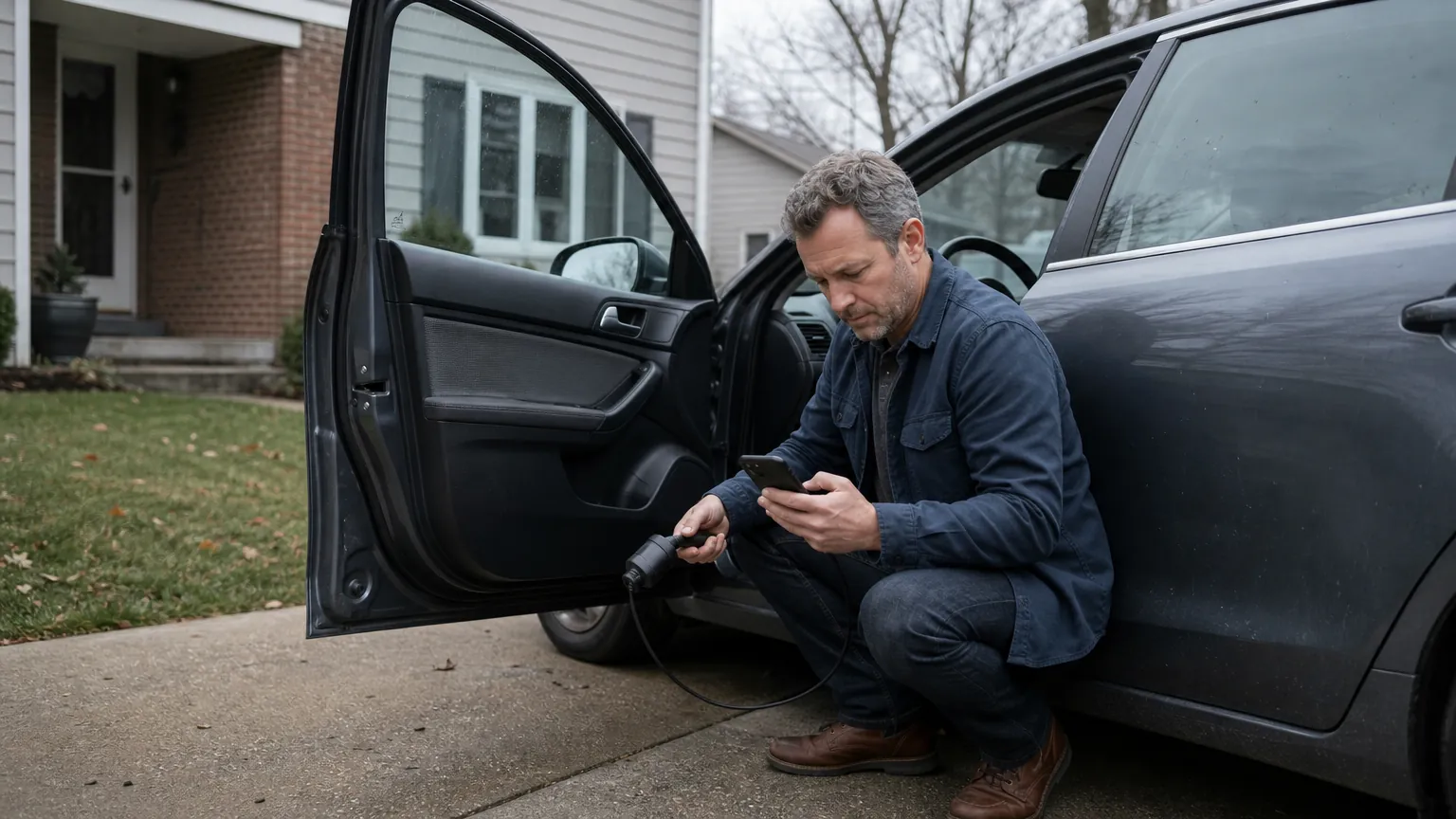
A used car can look spotless in the driveway and still hide an expensive problem under the hood. One of the cheapest ways to tip the odds in your favor is a small plug-in scanner that reads the car's own self-diagnostic system. These tools cost around $25 to $50 (roughly £20 to £40 or A$40 to A$75) for a basic handheld unit, and a little more for a Bluetooth dongle that talks to your phone. They won't turn you into a mechanic, and they are no substitute for an independent inspection, but used on a test drive they can reveal faults the seller may not know about, or may be hoping you won't notice. Here is what one actually tells you, what it can't, and how to use it without causing offense.
What the scanner plugs into
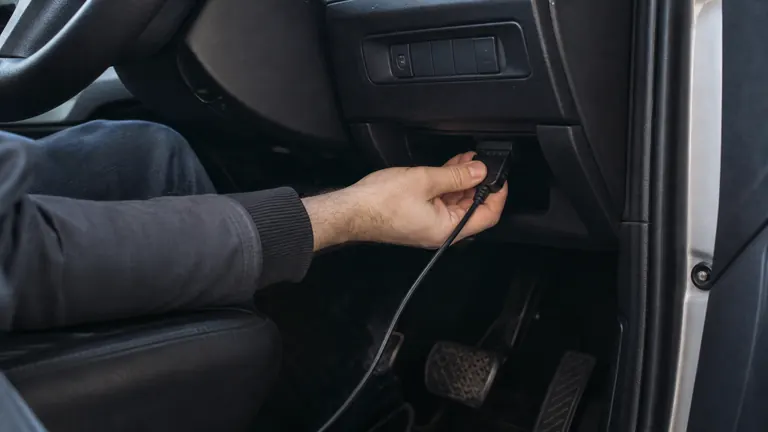
Nearly every car sold since the early 2000s has a standardized diagnostic socket called OBD2 (on-board diagnostics, second generation). In the US it has been required on gasoline cars since 1996. In Europe, including the UK, the equivalent EOBD system became mandatory on gasoline cars from 2001 and diesels from 2004. Australia followed with similar requirements from around 2006. The upshot: if the car is from this century, it almost certainly has a 16-pin socket, usually under the dashboard near the driver's knee.
The scanner reads data the car's computer stores about itself. It does not change anything. You plug it in, turn the ignition to the "on" position (engine running for live data), and read the results on the handheld screen or your phone app. No tools, no grease, no special training.
The jargon, in plain English
- Stored (confirmed) fault codes: problems the car has detected and logged. These are the ones that usually turn on a dashboard warning light.
- Pending codes: faults the car has seen once but not yet confirmed. An intermittent problem often shows here before it becomes a permanent fault.
- Readiness monitors: a set of internal self-tests (for the catalytic converter, oxygen sensors, evaporative system and so on). These matter more than most buyers realize, and I'll come back to them.
- Freeze frame data: a snapshot of conditions when a fault occurred, such as engine speed and temperature.
- Live data: real-time readings like coolant temperature and engine load while the car runs.
The clever part: spotting a recently cleared warning light
Here is the trick that pays for the scanner. A seller can clear fault codes and switch off a dashboard warning light in seconds, either with a scanner of their own or by disconnecting the battery. The warning light stays off for a while, long enough to sell the car. But clearing the codes also resets those readiness monitors to "not ready." They only switch back to "ready" after the car has completed its self-tests over a number of driving cycles, which can take days of normal driving.
So if you plug in and see most monitors reporting "not ready" or "incomplete" on a car that has supposedly been driven regularly, that is a reason to pause. It can mean the battery was recently disconnected for an innocent reason, such as a new battery. It can also mean someone cleared a check engine light shortly before you arrived. A couple of incomplete monitors is normal; a full set of them, on a warm car that has clearly been driven, deserves a polite question.
The scanner can also do rough mileage cross-checks. Some systems log distance since codes were cleared or store data you can compare against the odometer and the service history. It is not foolproof, and clocking (odometer fraud) is better caught by a history report, but it is another data point.
What it can and can't reveal
Be realistic about the limits. A scanner reads electronic faults the car's computer can detect. It is blind to anything mechanical that doesn't trip a sensor: worn brake pads, a slipping clutch, tired suspension, rust under the floor, a leaking water pump that hasn't yet overheated the engine, or body damage from a past crash. A clean scan is reassuring, not a clean bill of health.
| Question you care about | Cheap scanner | History report (Carfax / HPI / PPSR) | Pre-purchase inspection |
|---|---|---|---|
| Stored and pending fault codes | Yes | No | Yes |
| Recently cleared warning light | Yes (via readiness monitors) | No | Sometimes |
| Outstanding finance or write-off | No | Yes | No |
| Odometer fraud / clocking | Partial clue | Often yes | Partial clue |
| Brakes, clutch, suspension, rust | No | No | Yes |
| Stolen / salvage status | No | Yes | No |
| Typical cost | ~$25 to $50 one-off | ~$20 to $40 per report | ~$100 to $250 |
The three tools cover different ground. A scanner is a one-time purchase you can reuse on every car you look at. A history report checks paperwork and the car's recorded past. An inspection checks the physical condition. Used together they close most of the gaps.
If a warning light is on, stop
Some codes are minor. Others are not. A flashing check engine light, or a code pointing to misfires, means the engine should not be driven hard, because unburned fuel can destroy the catalytic converter. Codes relating to the airbag (SRS), ABS brakes or the transmission are safety and reliability concerns you should not shrug off. If you see these, treat the car as "needs a professional opinion before any money changes hands," not "a quick fix I'll sort later."
How to ask the seller politely
Most private sellers and dealers won't mind, and a flat refusal is itself informative. Keep it low-key.
- Ask ahead: "I'd like to plug a code reader into the diagnostic port during the test drive. Is that all right?" Framing it as routine makes it routine.
- Do it yourself, with the seller present. The port is under the dash; you are not opening anything.
- If monitors show "not ready," ask simply whether the battery was disconnected recently or a part replaced. A genuine answer is usually easy to give.
- Don't argue over the results on the spot. Note them down and factor them into your decision or your offer.
With a dealer, a scanner reading also helps you have a calmer conversation about what gets fixed before you buy. Many regions give used-car buyers from dealers some statutory protection, but private sales are typically "sold as seen" in the US, the UK and Australia alike, so your checks before you pay matter far more in a private deal.
A practical test-drive checklist
- Run a history report first (Carfax or AutoCheck in the US, HPI or similar in the UK, a PPSR check in Australia). No point driving across town for a written-off car.
- Arrive with a charged scanner and, for a Bluetooth unit, the app already installed and paired to a demo if possible.
- Plug in before the engine is warm if you can, so you see the honest starting state, then read again after driving.
- Note stored codes, pending codes and freeze frame data. Photograph the screen.
- Check readiness monitors. A full set of "not ready" on a car driven to meet you is a red flag worth questioning.
- Watch live coolant temperature; a healthy engine settles around 90°C (about 194°F) and holds steady.
- Cross-check the odometer against service records and any distance-since-clear data.
- Whatever the scan shows, budget for an independent pre-purchase inspection on anything you are serious about. Around $100 to $250 is cheap next to a failed transmission.
The short version
- A basic OBD2 scanner costs around $25 to $50 and reads a car's own fault codes and self-test status.
- Its best trick is spotting readiness monitors reset to "not ready," a sign a warning light may have been cleared just before sale.
- It cannot see mechanical wear, rust, crash damage, finance owing or a stolen or salvage history.
- Use it alongside a history report and an independent inspection, not instead of them.
- Airbag, ABS, transmission or flashing engine-light codes mean stop and get a professional opinion before you pay.
Daniel Hart
Editor, Car & Garage · Columbus, Ohio
Daniel edits the Car & Garage section. He writes about the plug-in scanners, dash cams and chargers that help drivers understand their cars and avoid unnecessary repair bills, and he is clear about when a professional mechanic is still the right call.
Keep reading
What Is an OBD2 Scanner, and Do You Actually Need One?
That little socket under your dashboard can tell you why the check engine light is on. Here's what a scanner reads, what it costs, and who really benefits.
Hidden Car Features: What 'Coding' Can Unlock on VW, Audi and BMW
Many German cars ship with features switched off in software. Here is what coding through the OBD port can turn on, and the risks worth knowing first.
Engine Warning Light On? What to Do in the First 10 Minutes
The engine warning light just came on. Here is how to tell a loose fuel cap from a problem that means stopping the car right now.
Comments
No comments yet. Share your experience or ask a question.