Electric Space Heater Costs: Are 'Eco' Models Worth It?
Slim 'eco' wall heaters promise to heat the room not the house for pennies, but the running-cost math is simpler and less flattering than the ads suggest.

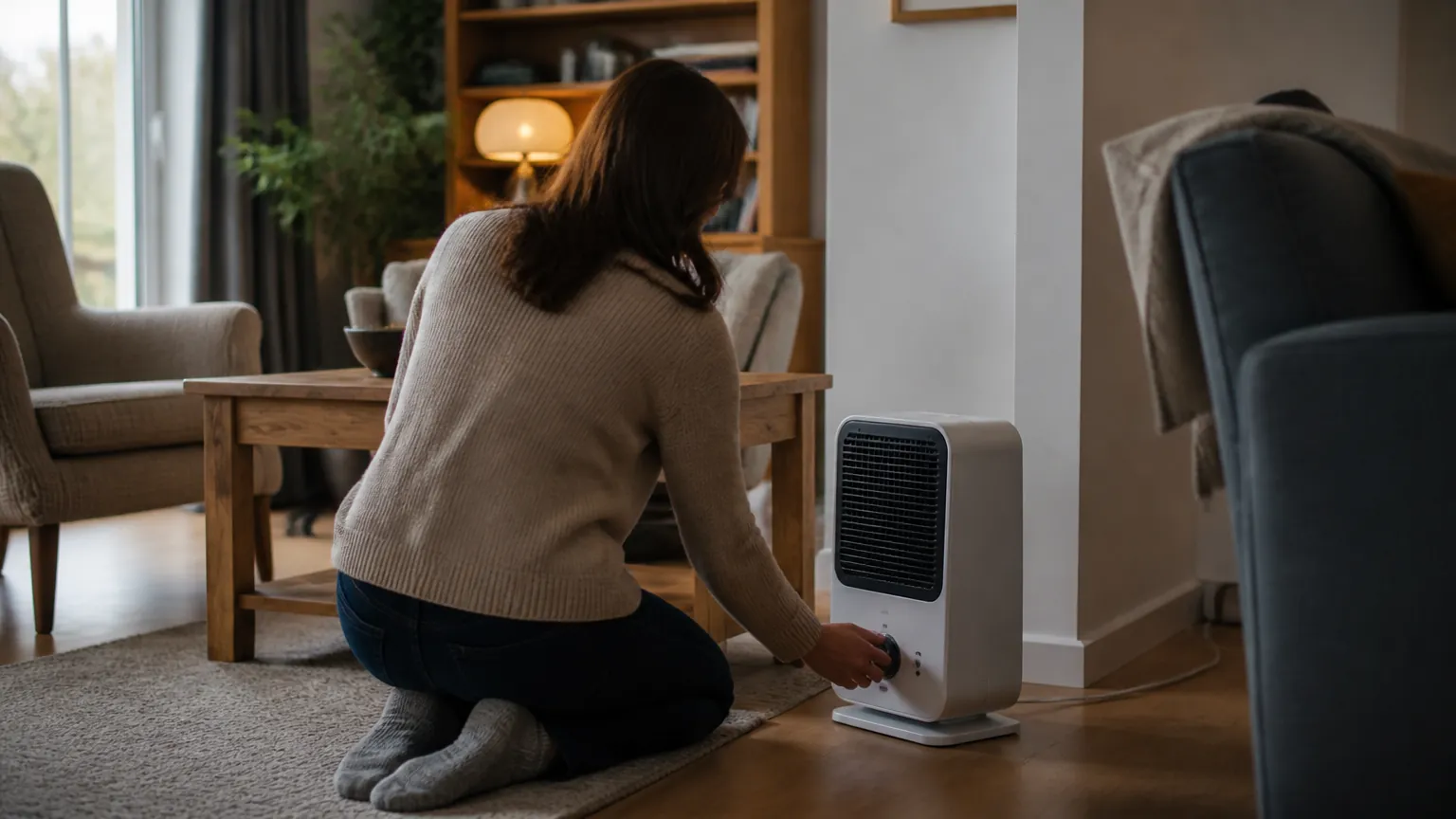
If you have seen an ad for a slim 'eco' wall heater lately, you have probably been told it heats the room, not the house, for just pennies an hour. These panels are being pushed hard right now as a clever way to beat high energy prices, and the pitch sounds reasonable: heat only where you are, and you pay less. The trouble is that an electric space heater is governed by physics that no amount of marketing can rewrite. In this guide we will work through what these heaters actually cost to run, where the clever claims fall apart, and when they genuinely do make sense.
How an electric space heater really works
Here is the part the ads tend to skip. An electric heater is almost perfectly efficient. Whether it is a cheap fan heater, a tall oil-filled radiator, or a sleek 'eco' panel in a designer housing, roughly 100 percent of the electricity it draws turns into heat in your room. There is no clever trick that gets more heat out of a watt. A 1,000-watt heater produces 1,000 watts of heat. A 2,000-watt heater produces 2,000 watts of heat. That is true regardless of the brand, the finish, or the word "eco" printed on the box.
This matters because "eco" panels are usually lower-wattage than a conventional heater. A typical slim panel draws somewhere between 400 and 1,200 watts. A standard portable heater is often 2,000 to 3,000 watts. So the eco panel does use less electricity per hour, but only because it produces less heat per hour. It is not doing more with less. It is doing less, more slowly.
What differs between models is how the heat is delivered and controlled: convection versus radiant warmth, how evenly it spreads, and whether a decent thermostat stops it running flat out once the room is warm. A good thermostat genuinely saves money, because the heater switches off instead of burning power you do not need. That is the real saving, and it has nothing to do with the "eco" label.
The running cost, worked out in plain numbers
Running cost comes down to one simple sum. Multiply the heater's power in kilowatts by the hours you run it, then by your electricity price per kilowatt-hour (kWh). A 1,000-watt heater is 1 kW. Run it for one hour and you have used 1 kWh.
Electricity prices vary a lot by country, so here are rough figures to work from: around 17 US cents per kWh in the US, about 25p in the UK, and around 30 Australian cents in Australia. Your own bill will say exactly what you pay, and it is worth checking.
Let us price a 1,000-watt eco panel running for four hours in the evening:
- US: 1 kW × 4 hours × $0.17 = about $0.68 per evening
- UK: 1 kW × 4 hours × £0.25 = about £1.00 per evening
- Australia: 1 kW × 4 hours × A$0.30 = about A$1.20 per evening
Now the same sum for a conventional 2,000-watt heater over the same four hours:
- US: 2 kW × 4 hours × $0.17 = about $1.36
- UK: 2 kW × 4 hours × £0.25 = about £2.00
- Australia: 2 kW × 4 hours × A$0.30 = about A$2.40
The eco panel costs half as much per hour. But remember why: it puts out half the heat. If the room is small and only needs a gentle top-up, the lower-powered panel may keep you comfortable and the saving is real. In a cold or draughty room, the panel may run constantly and still not get you warm, while the bigger heater reaches a comfortable temperature, switches off on its thermostat, and ends up costing something in between. Watts drawn over time is what you pay for, not the sticker on the front.
Comparing the common types
Most heaters sold today fall into a handful of categories. Here is how they stack up on the things that actually matter. Prices are approximate and vary by country and retailer.
| Type | Typical power | Rough price | Best for | Notes |
|---|---|---|---|---|
| Slim 'eco' panel | 400–1,200 W | $60–$200 | Gentle top-up heat in a small, insulated room | Low output, slow to warm a cold room; looks tidy on a wall |
| Fan heater | 1,000–2,000 W | $20–$50 | Quick blast of heat, bathrooms, short bursts | Noisy (often 45–55 dB), heat stops the moment it switches off |
| Oil-filled radiator | 1,000–2,500 W | $40–$120 | Steady background warmth for an hour or two | Quiet, stays warm after switch-off, heavy to move |
| Halogen / radiant bar | 400–1,200 W | $25–$60 | Warming a person directly, not the whole room | Instant directional heat; glowing elements need care around children |
| Convector heater | 1,000–2,000 W | $30–$90 | Even warmth across a medium room | Often wall-mountable; many eco panels are convectors in slim cases |
Notice that an oil-filled radiator or convector often does the same job as a premium "eco" panel for a fraction of the price. The expensive panel may look better on the wall and have a nicer app, but it is not cheaper to run watt for watt.
Where the marketing bends the truth
The phrase "heat the room not the house" is really an argument for any portable heater over central heating, not an argument for one particular panel. Heating a single occupied room electrically can be cheaper than running gas central heating for the whole home, especially where gas is expensive. That logic is sound. The sleight of hand is attaching it to a specific pricey product as if the product were the reason for the saving.
A few claims to treat with caution:
- "Uses up to 50% less energy." Usually true only because it is a lower-wattage model. Less energy, less heat.
- "German / ceramic / infrared technology for efficiency." All electric heaters are about equally efficient at turning power into heat. The material changes how heat feels and spreads, not how much you pay per kWh.
- "Only pennies a day." True at very low output for short periods. Run it for hours in a cold room and the pennies become dollars.
Honestly, the evidence that any one panel saves money over an equivalent-wattage ordinary heater is thin. The savings people report usually come from heating one room instead of the whole house, and from a thermostat that stops the heater running when it does not need to.
Smart controls and thermostats
The genuinely useful feature is good control. A thermostat that holds the room at, say, 20°C (68°F) and a timer that avoids heating an empty room will save you more than any marketing feature. You can get much the same control cheaply on an ordinary heater with a plug-in timer or a smart plug. We dug into whether those gadgets pay off in Do Smart Plugs Actually Save Money? The Real Running Costs, and the same money-minded logic applies here.
Safety and the rules where you live
Electric heaters draw a lot of current, so a few basics matter wherever you are.
- Plug a heater straight into a wall socket, not a power strip or extension lead. A 2,000-watt heater can overload a cheap strip and overheat it.
- Keep at least 1 meter (around 3 feet) clear of curtains, bedding and furniture, and never dry clothes on it.
- Keep radiant and halogen heaters well away from children and pets, as the elements get hot enough to burn.
- Look for a tip-over switch and overheat cut-out, and unplug the heater when you leave the house or go to bed.
Mains voltage and plugs differ by country, which affects maximum power. The US and Canada run on about 120 volts, so standard plug-in heaters top out around 1,500 watts on a normal outlet. The UK runs on 230 volts with fused three-pin plugs, and Australia on 230 volts too, so heaters there can reach 2,000 to 2,400 watts on an ordinary socket. Look for the relevant safety mark: UL or ETL in the US and Canada, UKCA or CE in the UK, and the RCM tick in Australia. A fixed wall-mounted heater wired into the mains should be installed by a qualified electrician, not wired in yourself.
The short version
- Every electric space heater is roughly 100 percent efficient, so "eco" models are not cheaper per unit of heat, they simply produce less heat.
- Running cost is power (kW) × hours × your rate; a 1,000-watt panel for four hours costs roughly $0.68 in the US, £1.00 in the UK, or A$1.20 in Australia.
- The real savings come from heating one room instead of the whole house, and from a good thermostat and timer, not from the panel's branding.
- An oil-filled radiator or convector often does the same job as a pricey eco panel for far less upfront.
- Plug into the wall, keep clear of fabrics, use the tip-over cut-out, and have any fixed wall heater installed by a professional.
Emma Clarke
Home & Kitchen writer · Melbourne
Emma covers home and kitchen gadgets, from smart plugs to air fryers. She focuses on what things really cost to buy and run at home, and on the features that matter once the novelty wears off.
Keep reading
Replacement Battery Guide: Repair or Replace Your Device?
A fading phone, drill or doorbell doesn't always mean buying new. Here's how to work out when a fresh battery pays off and when it quietly doesn't.
Ring Video Doorbell Review: Battery 2K Plus, Honestly Judged
The Ring Battery Doorbell 2K Plus brings sharper square video and a swappable battery, but owners say the real cost is the subscription you need for saved footage.
Heated Blanket Cost per Hour vs a Space Heater
We work out what a heated throw really costs per hour, compare it to running a space heater, and show when heating just yourself saves real money.
Comments
No comments yet. Share your experience or ask a question.