Smart Thermostats: Do They Really Cut Heating Bills?
A smart thermostat promises lower heating bills, but the real savings depend on your home and habits. Here is what to expect before you spend a cent.

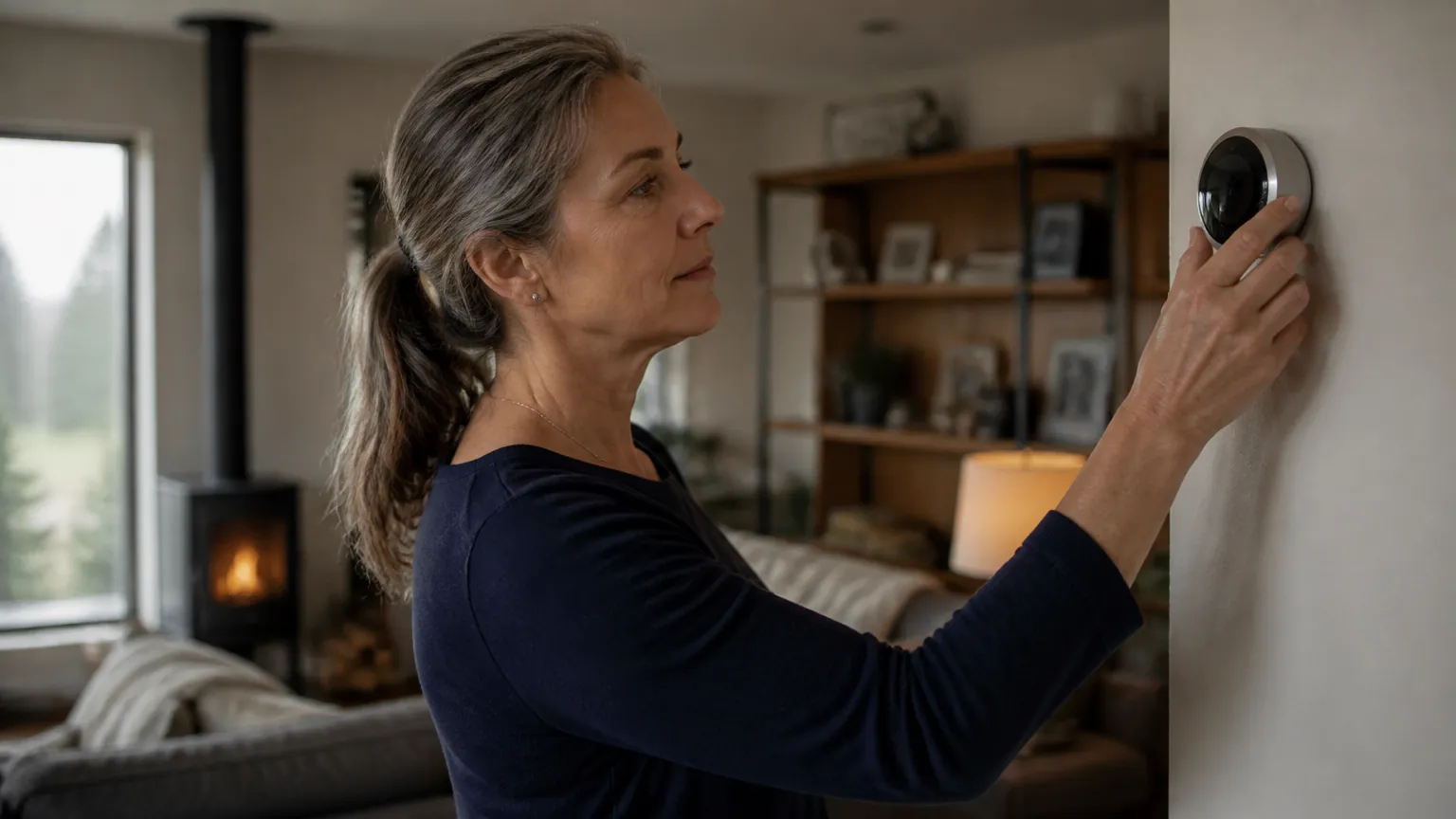
A smart thermostat is one of those gadgets that sounds like an easy win: spend a bit now, save on heating forever. With many households watching heating costs closely under tighter energy price caps, it is a fair question to ask whether the savings are real or just marketing. The honest answer is that a smart thermostat can cut your heating bill, but how much depends far more on your home and your habits than on the device itself. Some households save a useful amount. Others barely notice a difference. This guide walks through where the savings actually come from, which homes benefit most, and how to work out the numbers for yourself before you spend anything.
What a smart thermostat actually does
At its simplest, a thermostat turns your heating on and off to hold a set temperature. A smart thermostat does the same job, but adds a few extra tricks: you can control it from your phone, set detailed schedules, and in some cases let it learn your routine or sense when nobody is home. The heating hardware does not change. The boiler, furnace, or heat pump works exactly as before. What changes is the timing and precision of when heat is called for.
That matters because most wasted heating money comes from heating rooms you are not using, at times you are not there, or to temperatures higher than you need. A smart thermostat does not create savings by magic. It saves money only when it stops you heating an empty house or overheating a full one.
Common features worth knowing:
- Scheduling: heat comes on before you wake and wind down before you leave or sleep.
- Geofencing: your phone's location tells the system when the house is empty.
- Learning: the device builds a schedule from your manual adjustments over a week or two.
- Zoning: with extra sensors or valves, different rooms can be heated separately.
- Usage reports: an app shows how many hours the heating ran, which helps you spot waste.
Where the savings really come from
Heating is by far the largest energy cost in most homes in cooler climates, so even small percentage cuts add up. The savings from a smart thermostat come down to three behaviors it encourages.
Not heating an empty home
If you currently leave the heating on a timer that runs whether you are in or out, geofencing and smarter scheduling can trim hours of unnecessary heating. This is the biggest single source of saving for most people.
Turning the temperature down a notch
Lowering your target by 1°C (roughly 2°F) typically reduces heating energy by a few percent. A smart thermostat does not do this for you, but seeing your usage in an app often nudges people to try it. Dropping from 21°C (70°F) to 20°C (68°F) is barely noticeable with a sweater on and quietly saves money every day.
Heating only the rooms in use
If you add room sensors or smart radiator valves, you can avoid heating spare bedrooms and hallways. This adds cost and complexity, but in a larger home it can be where the real money is.
Manufacturers commonly claim savings of around 10 to 15 percent on heating bills. Those figures usually assume you are moving from a fairly basic setup to a well-used smart one. If you already heat your home carefully with a good timer and turn things down when you go out, your savings may be close to zero. It is worth being honest with yourself about your current habits before you expect a big drop.
Putting real numbers on it
Let us work through a rough example. Say your annual heating bill is $1,000. A 10 percent saving is $100 a year. If the thermostat and professional installation cost you around $200 to $300, it pays for itself in two to three years, then saves after that. A 5 percent saving on a smaller bill stretches the payback to four or five years, which is still fine for a device that may last a decade.
Electricity and gas prices differ a lot by country, so plug in your own rate. As a guide, household electricity runs roughly 17 US cents per kWh in the US, about 25p in the UK, and around 30 Australian cents in Australia. Gas is usually cheaper per unit than electricity, which is why gas-heated homes see a smaller dollar saving from the same percentage cut.
Here is how a few scenarios tend to compare.
| Your situation | Likely saving | Worth it? |
|---|---|---|
| No timer; heating left on manually | High (often 10%+) | Strong case |
| Basic timer, same temp all day | Moderate (5–10%) | Usually worth it |
| Careful user with a good timer | Low (0–5%) | Marginal |
| Out at unpredictable hours | Moderate to high | Geofencing helps |
| Small apartment, little heating | Low in dollar terms | Often not worth it |
| Large home, unused rooms | High with zoning | Worth it with sensors |
The thermostat itself uses very little power to run, typically a few watts, so its own running cost is negligible, maybe a dollar or two a year. The savings or lack of them come entirely from how it manages your heating.
Which homes benefit most
The best candidates are homes with high heating bills and irregular routines, where the current setup is simple. If you work shifts, come and go at different times, or often forget to turn the heating off, a smart thermostat does useful work. Larger homes with rooms you rarely use also benefit, especially if you add zoning.
The poorest candidates are small, well-insulated homes with low bills, households where someone is home all day and already manages the temperature by hand, and anyone whose existing programmable thermostat is already used well. In those cases the device is a convenience, not a saving. If what you really want is app control and a tidy interface, that is a fair reason to buy, as long as you do not expect the bill to fall much.
Insulation matters more than any gadget. A smart thermostat cannot hold heat that your walls, windows, and loft let out. Draft-proofing and insulation usually pay back faster than any smart device, so treat the thermostat as a finishing touch, not a first step. If you are weighing up small savings across the home, our look at whether smart plugs actually save money runs through the same kind of honest math for standby power.
Installation, compatibility and safety
This is where care matters, because a thermostat is wired into your heating system. Compatibility is the first thing to check. Systems vary between combi boilers, conventional boilers, heat pumps, and electric heating, and not every smart thermostat suits every setup. Most manufacturers offer an online compatibility checker, and it is worth using it before you buy.
Mains and wiring standards differ by country, so this is one area where local rules apply. In the UK, heating wiring work should follow the relevant regulations and is usually best left to a qualified heating engineer. In Australia, fixed electrical work must legally be done by a licensed electrician. In the US, rules vary by state, and low-voltage thermostat wiring is more often a DIY job, though furnace and boiler connections may not be. If you are unsure, or if the existing wiring looks old or unlabeled, stop and get a professional. Working on live mains wiring without knowing what you are doing is a genuine shock and fire risk, not a minor one.
A few practical points:
- Some thermostats need a common wire (a "C-wire") for constant power. Older systems may not have one.
- Most smart thermostats rely on home Wi-Fi, so a weak signal near the unit can cause dropouts.
- Check whether core scheduling still works if your internet goes down. Good ones keep heating locally.
- Consider data privacy: these devices know when you are home. Review what the app collects and shares.
The short version
- A smart thermostat saves money by not heating an empty or overheated home, not by magic.
- Expect roughly 5 to 15 percent off heating if your current setup is basic, and near zero if you already heat carefully.
- Work out your own payback: annual heating cost times your likely percentage saving, against a $200 to $300 outlay.
- Best for large homes, high bills, and irregular routines; weakest for small, careful, low-bill households.
- Check compatibility first, respect local wiring rules, and call a professional if the wiring is unclear.
Emma Clarke
Home & Kitchen writer · Melbourne
Emma covers home and kitchen gadgets, from smart plugs to air fryers. She focuses on what things really cost to buy and run at home, and on the features that matter once the novelty wears off.
Keep reading
Replacement Battery Guide: Repair or Replace Your Device?
A fading phone, drill or doorbell doesn't always mean buying new. Here's how to work out when a fresh battery pays off and when it quietly doesn't.
Ring Video Doorbell Review: Battery 2K Plus, Honestly Judged
The Ring Battery Doorbell 2K Plus brings sharper square video and a swappable battery, but owners say the real cost is the subscription you need for saved footage.
Heated Blanket Cost per Hour vs a Space Heater
We work out what a heated throw really costs per hour, compare it to running a space heater, and show when heating just yourself saves real money.
Comments
No comments yet. Share your experience or ask a question.