Fitbit Charge 6 Review: Honest Look at the Google-Powered Band
An honest look at the Fitbit Charge 6: strong heart-rate accuracy and comfort, but wobbly GPS and a paywall that frustrates owners.

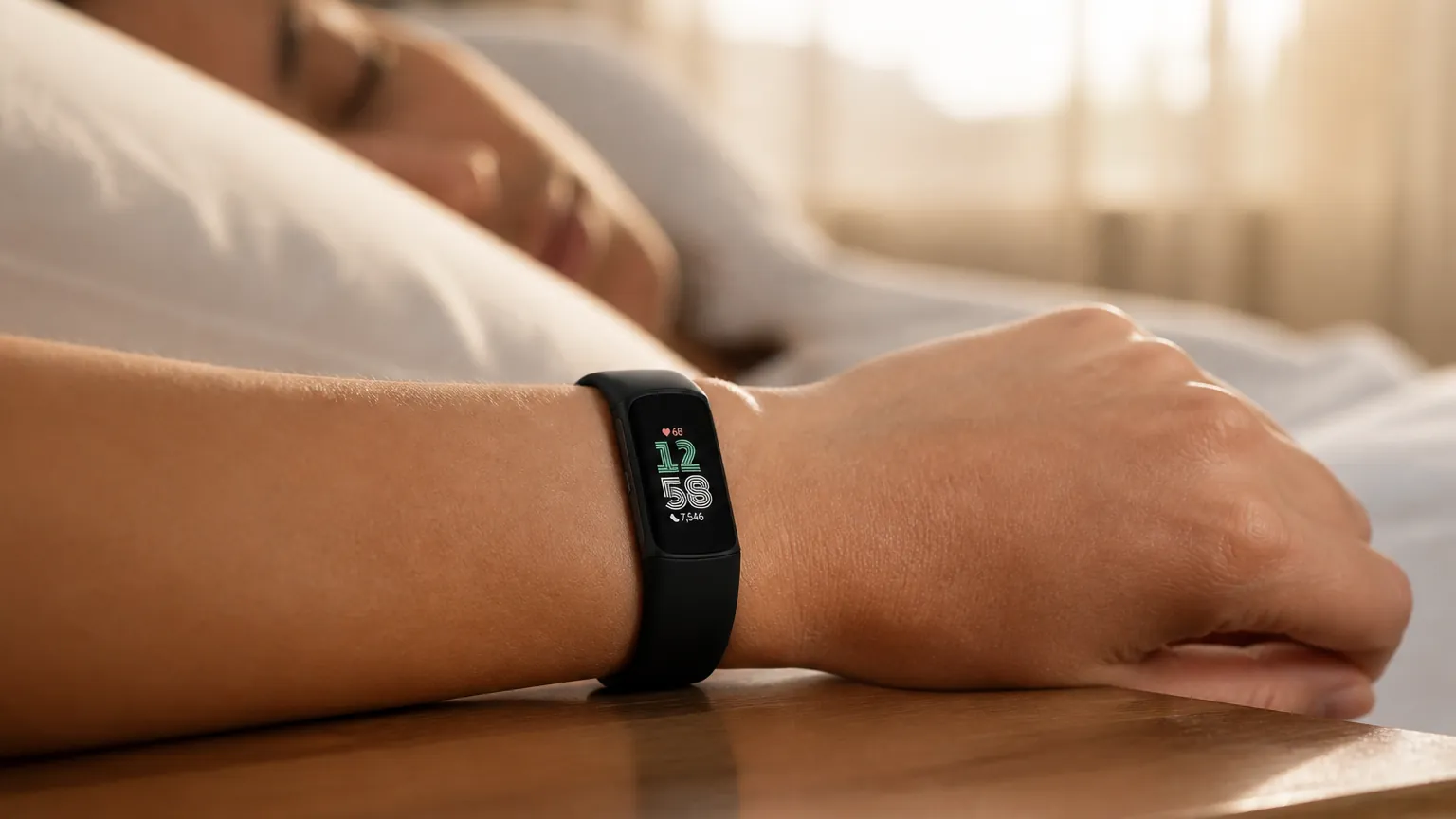
If you're weighing up a Fitbit Charge 6 review before you buy, here's a plain-English rundown of what this little band does well and where it trips up. The Charge 6 is Fitbit's flagship band-style fitness tracker, launched in October 2023: a slim wrist device that counts steps, logs 40-plus exercise modes, tracks heart rate around the clock, monitors sleep, and now ties in deeper Google features like Maps, Wallet and YouTube Music. It's aimed at practical people who want useful health and activity data without the bulk, cost or daily charging of a full smartwatch. We have not tested this device ourselves; this review brings together the maker's own specifications and what owners and independent reviewers report, so you can see what the marketing claims and what real-world use looks like.
What you get
The Charge 6 is a lightweight aluminum band with a small color touchscreen, built-in GPS, and a stack of health sensors. It pairs with the Fitbit app on iOS or Android, and the box includes small and large bands plus a proprietary magnetic charging cable. Here are the key specs as the maker and independent sources list them.
| Display | 1.04-inch color AMOLED touchscreen, 450 nits, Gorilla Glass |
| Weight | About 31 g with band (roughly 15 g without) |
| Dimensions | Approx. 1.45 x 0.91 x 0.44 in |
| Battery life | Up to 7 days typical; about 3–5 days with always-on display, far less with heavy GPS |
| Charge time | About 2 hours via proprietary magnetic cable |
| Water resistance | 5 ATM / 50 m (swimming and showering; not for high-velocity water sports or diving) |
| Sensors | Optical heart rate, single-lead ECG, EDA (stress), SpO2, skin temperature, altimeter, accelerometer |
| GPS | Built-in GPS + GLONASS |
| Connectivity | Bluetooth; Wi-Fi |
| Exercise modes | 40+ |
| Compatibility | iOS 15+ and Android 9.0+ |
| Price at launch | $159.95 (October 2023) |
One thing worth clearing up: the Charge 6 looks almost identical to the older Charge 5, sharing the same screen size and water rating, so the two are easy to confuse in listings. The main differences are a returning haptic side button (the Charge 5 had none), deeper Google integration that replaces older Fitbit features like Fitbit Pay and Spotify control, and a heart-rate sensor the maker says is more accurate. Don't confuse it with the pricier Google Pixel Watch 3, a full smartwatch that's also "powered by Fitbit," or the cheaper Fitbit Inspire 3, which has no GPS or tap-to-pay. Note too that the retail bundle has changed over time; this listing currently advertises a 3-month Google Health Premium trial, and that subscription is sold separately after the trial. This is a wellness device, not a medical one, so treat its readings as guidance rather than diagnosis.
What owners like
Across independent reviews and owner feedback, a few strengths come up again and again.
- Strong heart-rate accuracy: Independent testing against medical chest straps repeatedly ranks the Charge 6's wrist monitor among the best in its class, with one study citing a median error of about 4.5 bpm.
- Long battery life for a GPS band: With the always-on display off and light GPS use, owners typically get close to the advertised seven days, which reviewers call excellent for a tracker packing this many sensors.
- Light and comfortable: At roughly 31 g with the band, the slim body is easy to forget on the wrist and comfortable enough for all-day and overnight wear.
- Solid sleep tracking: Reviewers find the sleep-stage breakdown and nightly sleep score genuinely useful and reasonably matched to reality.
- Useful Google features: Turn-by-turn Google Maps on the wrist, Google Wallet tap-to-pay, and the ability to broadcast your heart rate to compatible gym machines like Peloton bikes, treadmills and ellipticals are all handy additions.
- Return of a physical button: Fitbit answered Charge 5 complaints by adding a haptic side button to wake the screen or return home, making day-to-day navigation less fiddly than the all-touch predecessor.
- Good value and a well-liked app: Reviewers rate it as one of the better value-for-money trackers in the lineup, helped by a polished, easy-to-read Fitbit app; it also launched $20 cheaper than the Charge 5.
Common complaints
The gripes are just as consistent, and some will be deal-breakers depending on how you plan to use it.
- Unreliable built-in GPS (common): A recurring complaint across professional and owner reviews is poor GPS accuracy. It worsens when the strap is worn tightly; loosening it helps GPS but hurts heart-rate accuracy, so you can't easily optimize both. Serious runners are the group most affected.
- Features locked behind a paywall (common): Several headline wellness metrics, including Daily Readiness, deeper sleep insight and trends, require a paid Premium subscription once the free trial ends, which owners find frustrating on a device they already bought. Music control is also limited to YouTube Music Premium, with no Spotify.
- Durability worries around the one-year mark (some owners): Across deal threads and marketplace reviews, some owners report units failing or developing battery and charging problems, occasionally just after the warranty window. Many of the worst stories involve the older Charge 5, but some Charge 6 owners describe the same.
- Poor customer service (some owners): A common theme is dissatisfaction with Fitbit/Google support when a device fails, with owners describing drawn-out chats and, at best, a discount rather than a straightforward replacement. Several say they switched to Garmin as a result.
- Small screen and weak-magnet charger (some owners): The compact 1.04-inch display shows only one data field at a time and struggles in direct sun, and reviewers note the magnetic charging cradle attaches weakly and can pop loose.
- Finicky raise-to-wake and touch controls (some owners): Reviewers report the raise-to-wake gesture often fails to light the screen, and the touchscreen is hard to use with gloves or sweaty, wet fingers.
Running costs and upkeep
The Charge 6 barely sips power, so there's no meaningful electricity maths to do here. It has a small internal lithium-ion battery that tops up via its proprietary cable in about two hours, roughly once a week under typical use. The energy to charge a wearable this size is a tiny fraction of a kilowatt-hour, so even at about 17 cents per kWh in the US, 25p in the UK or around 30 cents in Australia, the yearly cost rounds to effectively nothing.
The real recurring cost is optional Google Health Premium, which the maker prices at roughly $9.99 a month (about $79.99 a year) once the included 3-month trial ends. You don't have to pay it to use the basics, but several of the more detailed insights are gated behind it. The charging cable is proprietary and not shared with other Fitbit models, so it's worth guarding; a lost cable means buying a specific replacement. For upkeep, Fitbit advises drying the band and your skin after water exposure to reduce the risk of skin irritation, which is sensible with any snug-fitting wearable. The maker states a one-year limited warranty in most regions (two years in the European Economic Area) covering defects in materials and workmanship under normal use; it excludes cosmetic and accidental damage, and a replacement is warranted for the remainder of the original period or 30 days, whichever is longer. No recall or official safety notice was found for the Charge 6 itself.
How it compares
These are the rivals owners actually cross-shop with the Charge 6.
| Fitbit Charge 6 | Comfortable, accurate heart rate, week-long battery and a polished app; let down by shaky GPS and a subscription for the best insights. |
| Garmin (Vivoactive 6 / Forerunner 165 / Venu 3) | The usual upgrade for people leaving Fitbit over GPS, durability or the paywall; more reliable GPS, longer battery and advanced metrics with no subscription, but generally costs more. |
| Apple Watch SE / Series 11 | Better for iPhone owners who want a true smartwatch, adding fall and crash detection; costs much more and needs daily charging versus the Charge 6's week. |
| Xiaomi Smart Band 10 Pro / Amazfit bands | Cheaper and often longer-lasting on battery; good for budget shoppers, but lack Fitbit's depth in health tracking and app polish. |
Who should buy it, and who should skip it
- Buy it if you want a light, comfortable band for all-day and overnight wear.
- Buy it if accurate heart rate and a genuinely useful sleep score matter more to you than maps and apps.
- Buy it if you value a week between charges and a clear, friendly app.
- Skip it if you're a serious runner or cyclist who needs dependable GPS traces.
- Skip it if paying a monthly subscription for full features puts you off.
- Skip it if you really want a full smartwatch with apps and calls on the wrist.
Our Fitbit Charge 6 review verdict
Taken as an everyday health-and-activity band, the Charge 6 does the important things well. Owners and independent testers praise its heart-rate accuracy, its comfort, its sleep tracking and a battery that lasts close to a week with sensible settings. The returning side button and the Google additions, especially tap-to-pay and broadcasting your heart rate to gym machines, make daily use nicer than on the Charge 5. For most people who just want to move a bit more, sleep a bit better and keep an eye on their trends, it's an easy, well-rounded recommendation.
The reservations are real, though, and they cluster around two groups. If you run or ride and want trustworthy distance and route data, the patchy GPS is a genuine problem, and that's where Garmin keeps winning owners over. And if subscriptions irritate you, the paywall around Daily Readiness, deeper sleep insight and trends will sting on a device you've already paid for. Factor in some durability and support complaints, and the picture is a very good tracker with a few frustrating edges rather than a flawless one. Check the current price on Amazon and weigh it against a subscription-free Garmin if those limits matter to you.
As an Amazon Associate we earn from qualifying purchases.
Sources
This review brings together the maker's specifications and what owners report. We have not tested the Fitbit Charge 6 Fitness Tracker ourselves. Product details checked November 11, 2026.
- Fitbit Charge 6 review: A fun but flawed modern fitness tracker (TechRadar)
- Fitbit Charge 6 review (Tom's Guide)
- Fitbit Charge 6 review: Should you buy it? (Android Authority)
- Fitbit Charge 6 Review (OutdoorGearLab)
- Best Buy Q&A: Does it offer a warranty?
- Fitbit Charge 6: Everything we know (TechRadar)
- Apple Watch SE vs Fitbit Charge 6 (Tom's Guide)
- Fitbit Charge 6 vs Pixel Watch 3 (Tom's Guide)
- Fitbit denies Charge 5 update bricked trackers (TechRadar)
Tom Ashworth
Sleep, Health Tech & Travel writer · Manchester
Tom writes about sleep and health tech, travel gadgets and outdoor gear. He looks past spec sheets to how a gadget fits into everyday life, and he is wary of health claims that go beyond the evidence.
Keep reading
Garmin Venu 3 Review: Battery King, Smartwatch Compromise
Our Garmin Venu 3 review weighs multi-day battery and solid health tracking against a limited app store and some post-update niggles owners report.
Fitbit Inspire 3 Review: Light, Honest, Subscription-Gated
A level-headed look at the Fitbit Inspire 3, pulling together the maker's specs and what owners actually report after living with it day and night.

Anti Snoring Devices: What Actually Works to Stop Snoring
From chin straps to smart pillows and mouthpieces, here's what the evidence really says about anti snoring gadgets, and when to see a doctor instead.
Comments
No comments yet. Share your experience or ask a question.