Fitbit Inspire 3 Review: Light, Honest, Subscription-Gated
A level-headed look at the Fitbit Inspire 3, pulling together the maker's specs and what owners actually report after living with it day and night.

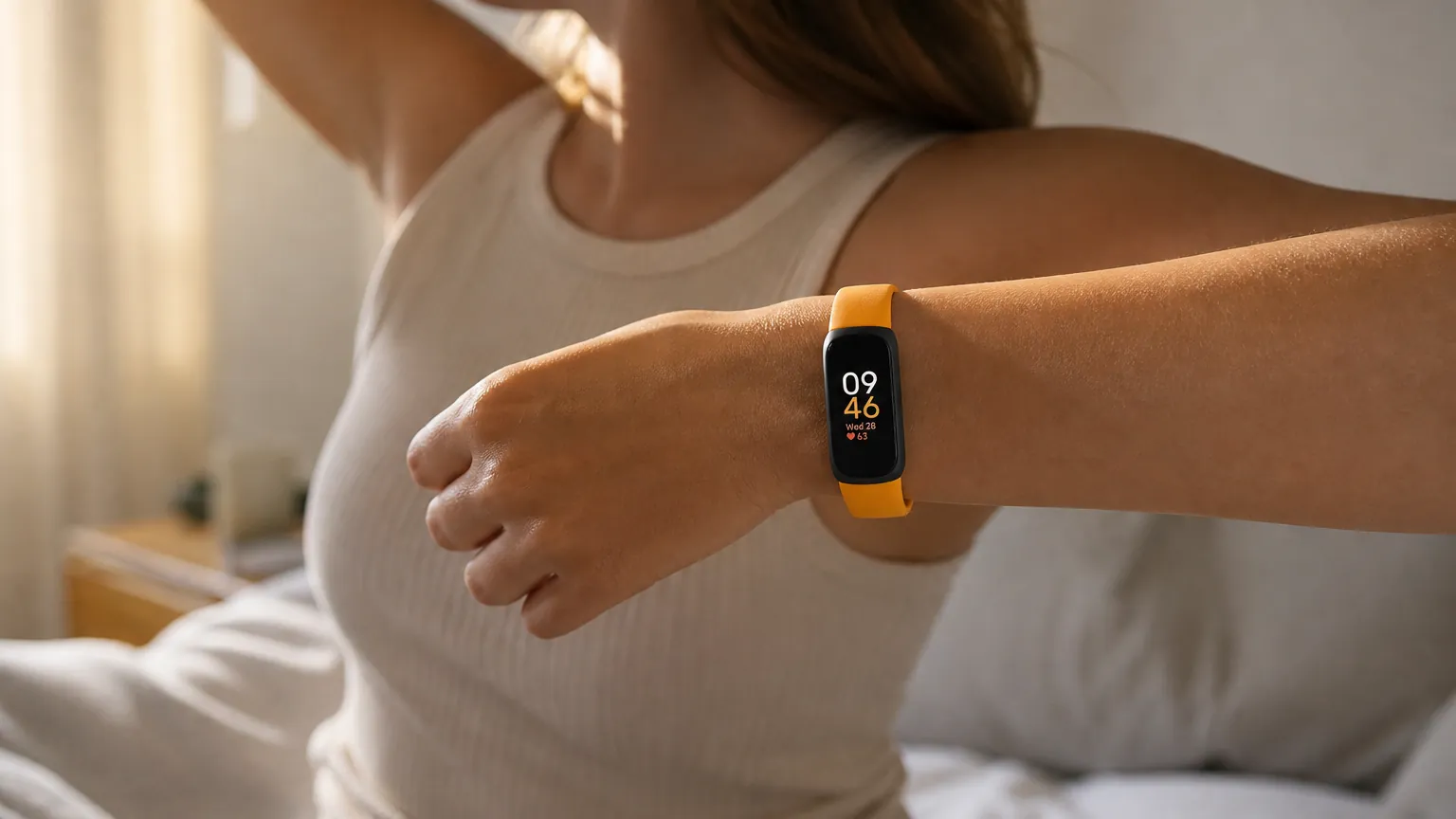
This Fitbit Inspire 3 review looks at a slim, lightweight activity tracker aimed squarely at people who want to keep an eye on their steps, heart rate and sleep without strapping a small computer to their wrist. It's a good fit for practical adults who want gentle nudges toward moving more and sleeping better, rather than athletes chasing split times. We have not tested this device ourselves; instead, this review brings together the maker's published specifications and what owners and independent reviewers consistently report after living with it. The Inspire 3 is now sold under the Google brand, and as of May 2026 the Fitbit app became "Google Health" and Fitbit Premium became "Google Health Premium," which is worth knowing before you set it up.
What you get
The Inspire 3 (model FB424; the black "Midnight Zen" version is FB424BKYW-US) is Fitbit's entry-level wrist tracker. It is the first Inspire with a color AMOLED touchscreen, and it adds SpO2 sensing. In the box you get the tracker, both a small and a large silicone band, a charging cable, and six months of Fitbit/Google Health Premium. It tracks steps, 24/7 heart rate, sleep stages, stress and more, and it leans on your phone's GPS rather than carrying its own.
| Display | Color AMOLED touchscreen, 126 x 294, about 0.76 in |
| Case length | About 1.55 in (39.4 mm) |
| Weight | Approx. 17.7 g (tracker) |
| Battery life | Up to 10 days (about 3 days with always-on display) |
| Charge time | About 2 hours (0–100%) |
| Sensors | Optical heart rate, SpO2, accelerometer, ambient light, skin temperature |
| GPS | Connected GPS only (uses paired phone), no built-in GPS |
| Water resistance | Swim-proof / water resistant |
| Compatibility | Apple iOS 16.4+ / Android OS 11.0+, Fitbit app required |
| In the box | Tracker, small and large bands, charging cable, 6 months Premium |
One thing to watch: the Inspire 3 is frequently confused with the older Inspire 2, which has a monochrome screen. Some third-party sellers have reportedly shipped an Inspire 2 inside Inspire 3 packaging, so check that the screen is in color before you accept a unit. The Inspire 3 is slightly wider and heavier than the Inspire 2. It's also commonly compared with the newer screen-free Fitbit Air and the pricier Fitbit Charge 6, which does have onboard GPS. As a wellness device, the Inspire 3 is not a medical instrument, and its readings should be treated as general guidance rather than diagnosis.
What owners like
For an entry-level tracker, the Inspire 3 earns steady praise across a few areas that matter in daily life.
- Long battery life: Owners and reviewers single this out repeatedly, routinely getting close to the rated 10 days per charge with normal use, so most people only charge about once a week. A couple of hours brings it back to full.
- Light and comfortable: At roughly 17.7 g it's low-profile and barely noticeable, which owners especially value for keeping it on overnight to track sleep.
- Reliable sleep tracking: This is often called the device's strongest feature, with detailed sleep-stage data and an overall Sleep Score that owners find genuinely useful.
- Bright color screen: Long-time Fitbit owners call the new AMOLED display a clear upgrade over the Inspire 2's monochrome screen, and much easier to read in daylight.
- Good step accuracy for the price: In published walk tests it tracked steps closely to hand-counted totals, in one case landing nearer the real number than the pricier Charge 6.
- Easy app and setup: Owners generally find pairing and the app straightforward, including people who describe themselves as not tech-savvy, and like the data presentation and motivational nudges.
- Works with both platforms: Unlike some rivals, it plays nicely with both Apple and Android phones, which broadens its appeal.
Common complaints
The gripes are real and worth weighing, especially the subscription question.
- Features locked behind Premium (common): Key insights like the Daily Readiness Score, Sleep Profile and long-term trend data require an ongoing paid Premium membership once the six-month trial ends, which many owners feel undercuts the value.
- Syncing and connection problems (some owners): A recurring frustration is the tracker refusing to sync or dropping the Bluetooth connection, sometimes needing restarts, reinstalls or troubleshooting; some report only one Fitbit syncing per phone.
- No built-in GPS and patchy distance data (some owners): It relies on a paired phone for GPS and doesn't report elevation gain at all. Owners note step-to-distance figures can be off, making it poorly suited to serious training.
- Tiny screen and fiddly controls (some owners): The small display shows limited data and truncates longer notifications, and the two haptic side buttons plus a touchscreen that can struggle with sweaty hands feel awkward to some.
- Band fit on the larger strap (occasional): Some owners say the longer band's off-center buckle lets the tracker rotate out of position, and others found the band tricky to lock securely into the housing.
- Dead-on-arrival or faulty units (occasional): A minority of buyers received units that wouldn't work or kept restarting, forcing a return or warranty claim.
Running costs and upkeep
There's no meaningful energy maths to do here, and it's worth saying why. The Inspire 3 is a wearable charged over USB using a small 78 mAh lithium battery that fills in about two hours. Charging roughly once a week draws only a tiny fraction of a watt-hour per cycle, far too little to register on an electricity bill at around 17 US cents, 25p or 30 Australian cents per kWh. In practice, the running cost of keeping it charged is effectively nothing.
The real ongoing cost is the subscription. After the included six months, Premium (now Google Health Premium) is an optional paid plan, and several of the more useful insights sit behind it. You can keep using the basic tracking without paying, but budget for the subscription if you want the full picture. For upkeep, the maker advises keeping the band clean and dry and giving your wrist a rest if you notice any skin irritation; there's no recall or safety notice specific to the Inspire 3. On warranty, Fitbit/Google provide a one-year limited warranty for new devices in the US and Canada (90 days for refurbished units), while within the European Economic Area the warranty period is two years by law. It covers defects in materials and workmanship under normal use and includes the bundled bands. For devices bought on or after 11 July 2023, claims go through the Google Hardware Warranty Center, and Google may repair or replace with new or refurbished parts at its discretion. An optional paid plan adds accidental-damage coverage.
How it compares
| Model | How it stacks up |
| Fitbit Inspire 3 | Light, comfy, bright color screen, strong sleep tracking and good step accuracy; no built-in GPS and leans on Premium for deeper data. |
| Fitbit Inspire 2 | Older monochrome screen but longer battery (owners report around two weeks versus roughly one week), and some prefer its alarms. The Inspire 3 wins on screen and daylight visibility. |
| Fitbit Air | Screen-free and cheaper, tested slightly more accurate for distance and elevation, with similar battery life. The Inspire 3 suits people who want to glance at live stats and notifications. |
| Samsung Galaxy Fit3 | More accurate on steps and distance with an onboard barometer for elevation and longer claimed battery (~13 days), but tied more closely to Samsung/Android. The Inspire 3 works with both iOS and Android. |
Who should buy it, and who should skip it
- You want a light, comfortable tracker you can wear around the clock, including overnight.
- You care most about sleep insight and general all-day activity rather than training metrics.
- You'd rather charge once a week than every night, and you use either an iPhone or an Android phone.
- You run or cycle seriously and need built-in GPS and accurate distance and elevation.
- You dislike subscriptions and won't pay for Premium once the trial ends.
- You want a larger screen with room for full notifications and easy touch controls.
Our Fitbit Inspire 3 review verdict
Taken on its own terms, the Inspire 3 does the entry-level job well. Owners consistently praise the long battery life, the barely-there comfort and the genuinely useful sleep tracking, and the move to a bright color screen is a clear step up from the Inspire 2. For someone who wants gentle encouragement to move more and a readable snapshot of how they slept, without the bulk or nightly charging of a smartwatch, it's an easy device to live with. Step counting holds up well for the price, and the app is approachable even if you're not especially tech-minded.
The reservations are just as real. The absence of built-in GPS and the patchy distance and elevation data rule it out for serious training, the small screen and haptic buttons frustrate some users, and sync problems crop up often enough to mention. Above all, several of the most interesting insights require an ongoing Premium subscription once the six months run out, which changes the value equation. If you're comfortable with that and you buy from a seller you trust (and check the screen is in color so you don't end up with an Inspire 2), the Inspire 3 is a sensible, low-fuss pick. Check the current price on Amazon before you decide.
As an Amazon Associate we earn from qualifying purchases.
Sources
This review brings together the maker's specifications and what owners report. We have not tested the Fitbit Inspire 3 Activity Tracker ourselves. Product details checked November 11, 2026.
- Fitbit Inspire 3 review (TechRadar)
- Fitbit Inspire 3 review (Tom's Guide)
- Fitbit Inspire 3 Fitness Tracker Review (Consumer Reports)
- I walked 7,000 steps with the Fitbit Charge 6 and the Fitbit Inspire 3 (Tom's Guide)
- I walked 6,500 steps with Fitbit Inspire 3 vs. Samsung Galaxy Fit3 (Tom's Guide)
- Fitbit Air vs Fitbit Inspire 3 — which $99 fitness tracker wins? (Tom's Guide)
- I walked 3,500 steps with the Fitbit Air vs Fitbit Inspire 3 (Tom's Guide)
- The Fitbit Inspire 3 for reliable sleep tracking (Tom's Guide)
- The Fitbit sleep tracker that helped decode 3 a.m. wake ups (Tom's Guide)
- Inspire 3 - Syncing issues (Fitbit Community)
Tom Ashworth
Sleep, Health Tech & Travel writer · Manchester
Tom writes about sleep and health tech, travel gadgets and outdoor gear. He looks past spec sheets to how a gadget fits into everyday life, and he is wary of health claims that go beyond the evidence.
Keep reading
Garmin Venu 3 Review: Battery King, Smartwatch Compromise
Our Garmin Venu 3 review weighs multi-day battery and solid health tracking against a limited app store and some post-update niggles owners report.
Fitbit Charge 6 Review: Honest Look at the Google-Powered Band
An honest look at the Fitbit Charge 6: strong heart-rate accuracy and comfort, but wobbly GPS and a paywall that frustrates owners.

Anti Snoring Devices: What Actually Works to Stop Snoring
From chin straps to smart pillows and mouthpieces, here's what the evidence really says about anti snoring gadgets, and when to see a doctor instead.
Comments
No comments yet. Share your experience or ask a question.