Hatch Restore Review: Honest Look at the Restore 2 Clock
Our Hatch Restore review weighs a gentle sunrise, warm white noise and a stylish design against the subscription nudges and the ongoing need for Wi-Fi.

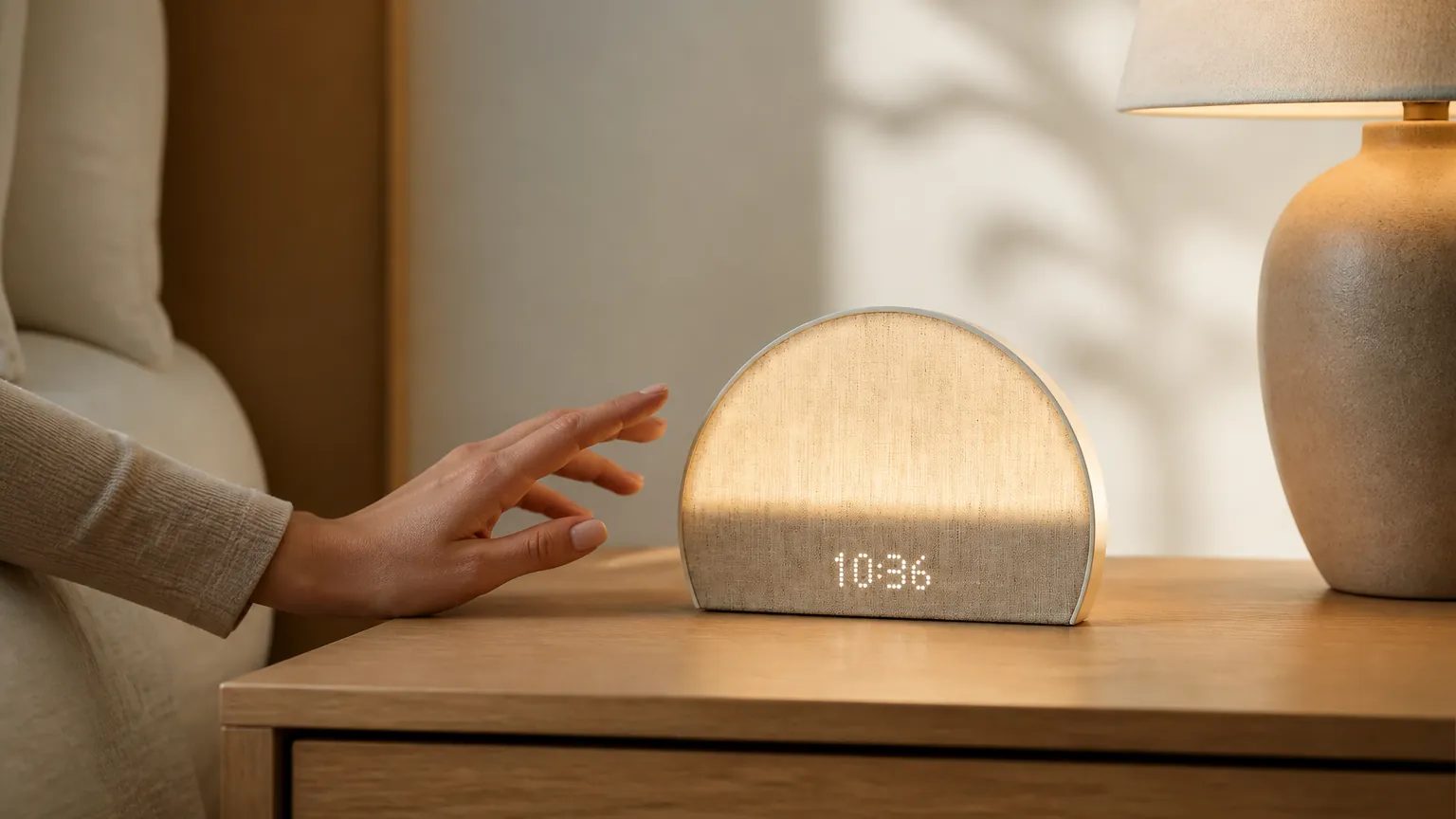
If you dread the jolt of a phone alarm, the Hatch Restore 2 promises a gentler start: a light that brightens like a slow sunrise, paired with a sound machine for the night before. This Hatch Restore review looks at the Restore 2 (model HBR4802, the Slate colorway sold under this listing), an outlet-powered bedside device aimed at adults who want a calmer wind-down and a kinder wake-up without reaching for their phone. It's a wellness gadget, not a medical device, and nothing here is a treatment for sleep problems. To be clear up front: we haven't tested this unit ourselves. This review brings together the maker's own specifications with what owners and independent reviewers consistently report, so you can weigh the marketing against real-world experience.
What you get
The Restore 2 is a corded sunrise alarm clock and sound machine with a matte, semicircular shape designed to sit on a nightstand. The light brightens gradually before your alarm, the three built-in speakers handle white noise and sleep sounds, and a dimmable clock face can be hidden overnight. Most of the setup and customizing happens in the free Hatch Sleep app for iOS and Android; on the device itself there are only two buttons plus an alarm toggle. It needs Bluetooth for setup and a stable 2.4 GHz Wi-Fi connection for ongoing use, and it only works plugged into a power outlet.
| Type | Sunrise alarm clock + sound machine (outlet-powered) |
| Dimensions | Approx. 5.7 in diameter x 5.3 in height (listing also cites 7.23 in) |
| Weight | Approx. 1.4–2.5 lb depending on source |
| Connectivity | Wi-Fi (2.4 GHz only) plus Bluetooth for setup |
| Power | Corded AC adapter, no battery backup |
| Sleep sounds | 80+ advertised (full library needs Hatch+) |
| Light | Brightness 1–100, multiple colors; around 100 lux at peak |
| Sunrise duration | 5 to 60 minutes, in 5-minute steps |
| Speakers | Three (versus one on the original Restore) |
| Subscription | Hatch+ optional, around $4.99/month or $49.99/year |
| Colors | Slate, Putty, Latte |
| Model number | HBR4802 |
It's easy to confuse the Restore 2 with its siblings. The original Hatch Restore (Restore 1) has a single speaker and a lower price; the Restore 2 adds three speakers for fuller sound. The newer Hatch Restore 3, released in January 2025, looks similar but adds a central rotating "Big Button" with more on-device controls, a slightly smaller footprint, new colors and a revised Wi-Fi antenna. Separately, the Hatch Rest and Rest+ are baby and kids' sound machines from a different product line; a 2024 power-adapter recall applied to those, not to the Restore 2. One more thing to note: Hatch discontinued the Restore 2 in 2026 and now points new buyers to the Restore 3. The two overlap heavily, and existing Restore 2 owners are generally told there's no need to upgrade.
What owners like
Owner feedback across independent reviews is broadly positive, with a few features praised again and again.
- Gentle sunrise wake-up: This is the single most-praised feature. The light ramps up gradually over about 30 minutes before the alarm, and many owners say waking feels far less jarring than a phone alarm, with the groggy feeling often easing within the first week.
- Good sound quality: Owners coming from phone apps or cheap Bluetooth speakers describe the built-in audio as full and warm rather than tinny, tuned for quiet bedside listening.
- Highly customizable routines: Color, brightness and sunrise or sunset duration are all adjustable, and you can build bedtime and wake routines from a sound library, though reviewers note the app takes some getting used to.
- Dimmable, screen-free clock at night: The time display can be hidden once white noise starts, which owners like because it stops the middle-of-the-night habit of checking how much sleep is left.
- Phone-free bedtime: Starting your wind-down or stopping the alarm with a button, rather than your phone, is something several owners say cut their night and morning screen time.
- Attractive design: The matte, semicircular shape and neutral colors are frequently called stylish, blending into a bedroom without looking like obvious tech.
- Works without a subscription: The core alarm, light and sound functions work without paying for Hatch+, and longer-term reviews spanning one to two-plus years generally report good durability.
Common complaints
The frustrations are consistent too, and a couple may be deal-breakers depending on how you plan to use it.
- Best content locked behind Hatch+ (common): The expanded library of meditations, sleep stories and soundscapes needs a paid Hatch+ membership (around $4.99/month or $49.99/year). Reviewers say the app pushes the trial hard and makes the free tier feel deliberately thin.
- Depends on Wi-Fi and the app (some owners): Ongoing use needs a stable 2.4 GHz Wi-Fi connection, and setup and changes require the app. Some owners report the device behaving unreliably when connectivity or subscription status changes. Hatch reportedly tweaked the Wi-Fi antenna on the Restore 3 to address early connectivity gripes.
- Expensive for what it is (common): At roughly $170–$200 at launch it's one of the pricier bedside devices, and with Hatch+ the first-year cost can climb past $250. Now that it's discontinued, leftover stock has sometimes been priced above the newer Restore 3.
- Light isn't the brightest (some owners): Peak brightness of around 100 lux suits a normal bedroom, but some reviewers say it falls short in very large rooms or heavily blacked-out spaces, and independent testing often rates Philips SmartSleep brighter at the eye.
- Limited physical controls, no Bluetooth audio (some owners): With only two buttons and an alarm toggle, most adjustments mean picking up your phone, and you can't use it as a Bluetooth speaker or hook up external speakers. The Restore 3 added more on-device controls.
- Volume may be too low for heavy sleepers (occasional): A few reviewers note the top volume might not reliably wake very deep sleepers relying on sound alone.
Running costs and upkeep
Hatch doesn't publish a running wattage, and in practice you can treat this as a near-trivial cost. It's an LED clock and speaker running continuously from an AC adapter, with no battery to charge. Third-party replacement adapters are rated 24V DC at 1.5A, which is roughly 36W of maximum output capacity, not the typical draw; real-world consumption for an LED alarm clock in normal night and standby use is likely only a few watts. For that reason the detailed energy maths isn't worth doing here. As a rough sense check, even if it averaged around 3W all day, that's about 26 kWh a year, which comes to roughly $4.50 at 17 US cents per kWh, about £6.50 at 25p, or around AU$8 at 30 Australian cents. It's a few dollars or pounds a year, no more.
The only recurring cost that actually matters is Hatch+, at around $4.99/month or $49.99/year, and only if you want the full content library. Upkeep is minimal: wipe the surface with a soft, dry cloth, and because there's no battery backup, remember the clock and alarm rely on mains power staying on. Hatch provides a one-year limited warranty against defects in materials and workmanship from the date of registration, for the original purchaser who buys new (or certified refurbished) from Hatch or an authorized reseller. Products from unauthorized resellers aren't covered, and warranty service is limited to North America, the UK, EU and Australia. Retailers also note a 60-night money-back guarantee. One practical note for international buyers: the Restore 2 is outlet-powered, so make sure you're getting a unit supplied for your country's plug and voltage rather than one needing an adapter.
How it compares
Owners tend to weigh the Restore 2 against a few familiar rivals, each with a different priority.
| Hatch Restore 2 | Strong all-rounder with warm sound and a tidy design, but needs the app and leans on a subscription for its best content. |
| Hatch Restore 3 | The direct successor with the same routines plus more on-device buttons, a smaller footprint and tweaked Wi-Fi. Reviewers say it's the better buy for new shoppers, especially as it often costs the same or less, but not worth upgrading to if you already own a Restore 2. |
| Philips SmartSleep Wake-Up Light | Preferred by those who want the brightest, most authentic sunrise with no app or subscription, and it adds FM radio. Weaker as a sound machine and far less customizable. |
| Lumie Bodyclock Shine 300 | Rated among the brightest and most adjustable standalone sunrise clocks in independent light-meter testing. Favored for pure wake-up-light performance without any app ecosystem. |
Who should buy it, and who should skip it
- You wake badly to a harsh phone alarm and want a gentler, gradual light.
- You want to build a phone-free bedtime routine with warm white noise.
- You value a stylish, low-profile clock that doesn't look like a gadget.
- You have reliable 2.4 GHz Wi-Fi and don't mind using an app to set things up.
- You want the brightest possible sunrise for a large or blacked-out room (look at Lumie or Philips).
- You refuse to deal with a subscription nudging you toward paid content.
- You have patchy Wi-Fi, want full control from physical buttons, or need a Bluetooth speaker.
- You're a very deep sleeper who needs a loud alarm to wake on sound alone.
Our Hatch Restore review verdict
The Restore 2 does the main job well. The sunrise wake-up genuinely wins people over, the three-speaker audio sounds warmer than most bedside options, and the screen-free, phone-free design is exactly what a lot of tired adults are after. For a calmer wind-down and a kinder morning, the fundamentals are sound, and owners who've lived with it for a year or more tend to keep recommending it.
The reservations are real, though. So much runs through the app and Wi-Fi that the device feels less independent than a simple alarm clock should, the best content sits behind a Hatch+ paywall the app pushes hard, and the price is tough to justify now that it's discontinued and sometimes sells for more than the newer Restore 3. If you want this ecosystem, the Restore 3 is usually the smarter pick for a new buyer; if you want the brightest light with no subscription, a Philips or Lumie makes more sense. Check the current price on Amazon and compare it against the Restore 3 before you commit.
As an Amazon Associate we earn from qualifying purchases.
Sources
This review brings together the maker's specifications and what owners report. We have not tested the Hatch Restore 2 Sunrise Alarm Clock ourselves. Product details checked November 11, 2026.
Tom Ashworth
Sleep, Health Tech & Travel writer · Manchester
Tom writes about sleep and health tech, travel gadgets and outdoor gear. He looks past spec sheets to how a gadget fits into everyday life, and he is wary of health claims that go beyond the evidence.
Keep reading
Garmin Venu 3 Review: Battery King, Smartwatch Compromise
Our Garmin Venu 3 review weighs multi-day battery and solid health tracking against a limited app store and some post-update niggles owners report.

Fitbit Inspire 3 Review: Light, Honest, Subscription-Gated
A level-headed look at the Fitbit Inspire 3, pulling together the maker's specs and what owners actually report after living with it day and night.
Fitbit Charge 6 Review: Honest Look at the Google-Powered Band
An honest look at the Fitbit Charge 6: strong heart-rate accuracy and comfort, but wobbly GPS and a paywall that frustrates owners.
Comments
No comments yet. Share your experience or ask a question.