Thermostatic Radiator Valve Zoning: Are the Savings Real?
Smart radiator valves promise room-by-room heating control and lower bills, but the install cost adds up fast. Here is what the numbers really look like.

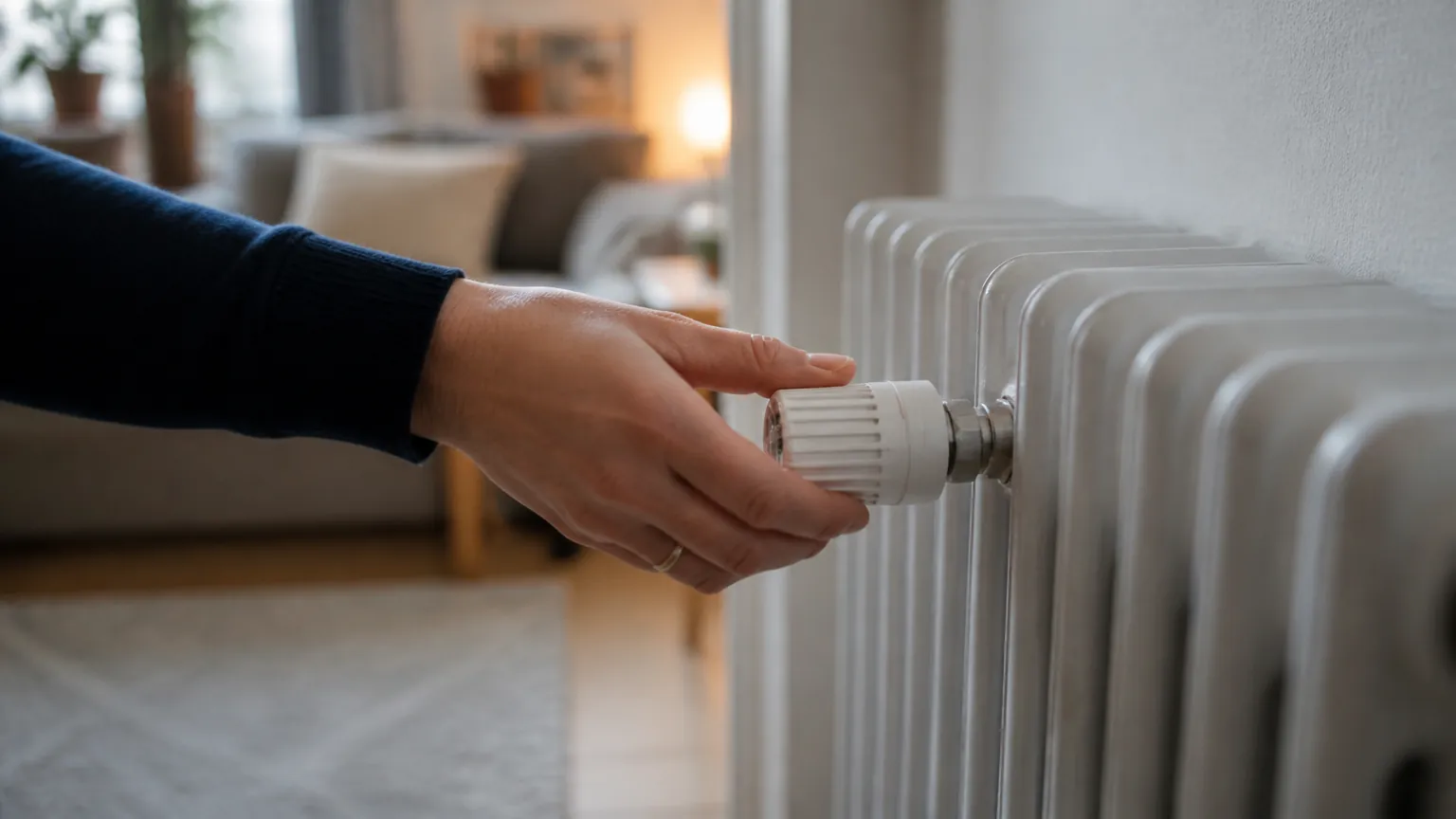
If you heat your home with a boiler and radiators, you have probably noticed that every room warms up whether you are using it or not. The spare bedroom, the hallway, the dining room you sit in twice a week: all getting the same heat as the rooms you actually live in. A smart thermostatic radiator valve promises to fix that by letting you set different temperatures in different rooms and turn down the heat where nobody is sitting. The idea is sound. The question most people actually care about is whether the savings justify the cost of fitting them. This guide walks through how the system works, what it realistically costs, and what you can expect to get back.
What a thermostatic radiator valve actually does
A traditional radiator valve is just a tap. You turn it up or down by hand, and it controls how much hot water flows through that one radiator. A classic (non-smart) thermostatic radiator valve goes one step further: it has a temperature-sensitive head that automatically closes the flow as the room warms up and opens it again as the room cools. These have been around for decades and cost very little.
A smart thermostatic radiator valve replaces that head with a small motorized unit, usually battery-powered, that screws onto the existing valve body. It has a temperature sensor, a little motor to open and close the flow, and a wireless radio. It talks to a central hub or your home Wi-Fi, so you can set schedules and temperatures for each radiator from an app or your voice assistant.
The key word is zoning. Instead of one thermostat in the hallway deciding the temperature for the whole house, each room becomes its own zone. You can set the living room to 21°C (70°F) in the evening, the bedrooms to 18°C (64°F) overnight, and leave the guest room at a frost-protection setting of around 7°C (45°F) until you need it.
The catch most people miss
Smart valves control individual radiators, but they do not switch the boiler itself unless they are paired with a compatible smart thermostat from the same ecosystem. If your boiler is still being switched on and off by an old wall thermostat in the hall, your valves can only ever close radiators that are already receiving hot water. For the full benefit, you generally need the valves and a smart thermostat that can call for heat based on which rooms need it. That matters for both the savings and the cost, so keep it in mind as we go.
How the savings are supposed to happen
The savings come from heating less space, less often. If you stop fully heating two or three rooms you rarely use, and you stop overheating bedrooms during the day, you burn less fuel. Manufacturers commonly claim savings in the range of 20 to 40 percent on heating costs. That figure is best treated with caution. It usually assumes you were heating the whole house to a high temperature on a crude schedule before, and that you follow the smart schedule faithfully afterward.
In practice, the honest range reported by households is wider and lower. If you were already reasonably careful, turning radiators down by hand and not heating empty rooms, the extra saving from automation is modest. If your heating was previously an all-or-nothing affair, the saving can be meaningful. The real variable is behavior, not the hardware.
Here is a rough worked example. Say your annual heating bill is around $1,500. A realistic saving from good zoning might be 10 to 15 percent, so roughly $150 to $225 a year. A manufacturer's best-case 30 percent would be $450, but treat that as the ceiling, not the expectation. Electricity and gas prices differ by country, so your own bill is the number to work from, not ours.
What it costs to fit
Smart valves are sold individually or in starter kits. Prices vary by brand and country, but these ranges are typical.
- A single smart thermostatic radiator valve: around $40 to $80 each (roughly £35 to £70, or A$70 to A$130).
- A hub or bridge, if the system needs one: around $50 to $100.
- A compatible smart thermostat to control the boiler: around $120 to $250.
- Replacement batteries: most valves use two AA cells lasting roughly 12 to 24 months, so budget a few dollars per valve per year.
Most valves screw on without draining the system, and many fit the common valve bodies found across the UK, Europe and Australia. Fitting is usually a job you can do yourself in a few minutes per radiator. The exception is if your existing valve body is an unusual size or is seized solid, in which case you need a plumber to swap the body, and that means draining down part of the system. In North America, hot-water radiator systems are less common than forced-air furnaces, so smart valves are more of a niche product there; check compatibility carefully before buying.
| Scenario | Rooms with valves | Approx. upfront cost | Likely yearly saving | Rough payback |
|---|---|---|---|---|
| Small flat, valves only, existing thermostat | 3 | $180 to $300 | $80 to $150 | 2 to 3 years |
| Family house, valves plus hub | 6 | $350 to $600 | $150 to $250 | 2 to 4 years |
| Full system, valves plus smart thermostat | 8 | $600 to $1,000 | $200 to $400 | 3 to 5 years |
These are illustrative ranges, not measured results. Your payback depends on how much you heat, your fuel price, and how disciplined you were before. For context, if your gas works out at around 17 US cents per kilowatt-hour equivalent, every 100 kWh you avoid saves about $17; at around 25p in the UK that is about £25 per 100 kWh, and at around 30 Australian cents roughly A$30. Multiply by the hundreds of kilowatt-hours a year you stop wasting and you get a feel for the real number.
Where zoning genuinely helps, and where it does not
Zoning is most useful in homes with a clear mix of used and unused rooms, and in households where people are in and out at different times. It is also handy if someone wants a cooler bedroom than the rest of the house. The automation removes the daily chore of remembering to turn radiators up and down.
It helps less in small, well-insulated homes where every room is used, and in open-plan spaces where "zones" bleed into each other. Closing off one cold room can also push damp and condensation problems if that room is never heated at all, so keep unused rooms at a low frost-protection setting rather than fully off. If your house is poorly insulated, spending the same money on draught-proofing and loft insulation will usually save more than valves will.
If you are weighing up several small energy gadgets, it is worth reading our honest look at whether smart plugs actually save money before you spend, and our take on whether a cool-and-heat tower is worth it for heating a single room. And if you are adding smart kit around the house generally, our Blink Outdoor 4 review covers the kind of battery and connectivity trade-offs you will meet with valves too.
A few practical points before you buy
- Check that the valves fit your existing valve bodies, and whether the brand needs its own hub.
- Decide early whether you also want a smart thermostat, since that is where most of the saving and most of the cost sits.
- Keep spare AA batteries and note that cold rooms drain them faster.
- Keep little hands away from the units; they are not dangerous, but the settings are easy for a curious child to change.
- Do not fully switch off radiators in rooms prone to damp. Use a low frost setting instead.
The short version
- A smart thermostatic radiator valve lets you set different temperatures room by room, which can trim your heating bill if you were previously heating the whole house evenly.
- Manufacturers claim 20 to 40 percent savings; a realistic figure for an already-careful household is closer to 10 to 15 percent.
- Expect around $40 to $80 per valve, plus a hub or smart thermostat for the full benefit, with payback commonly in the two-to-five-year range.
- Insulation and draught-proofing often save more per dollar than valves do, so do those first.
- Keep unused rooms at a low frost setting rather than fully off, and budget for battery changes every year or two.
Emma Clarke
Home & Kitchen writer · Melbourne
Emma covers home and kitchen gadgets, from smart plugs to air fryers. She focuses on what things really cost to buy and run at home, and on the features that matter once the novelty wears off.
Keep reading
Replacement Battery Guide: Repair or Replace Your Device?
A fading phone, drill or doorbell doesn't always mean buying new. Here's how to work out when a fresh battery pays off and when it quietly doesn't.
Ring Video Doorbell Review: Battery 2K Plus, Honestly Judged
The Ring Battery Doorbell 2K Plus brings sharper square video and a swappable battery, but owners say the real cost is the subscription you need for saved footage.
Heated Blanket Cost per Hour vs a Space Heater
We work out what a heated throw really costs per hour, compare it to running a space heater, and show when heating just yourself saves real money.
Comments
No comments yet. Share your experience or ask a question.