Fan Heater Combo: Is a Cool-and-Heat Tower Worth It?
A cool-and-heat tower promises one tidy gadget for the whole year, but does it really save money and space, or just cost more to run? Let's add it up.

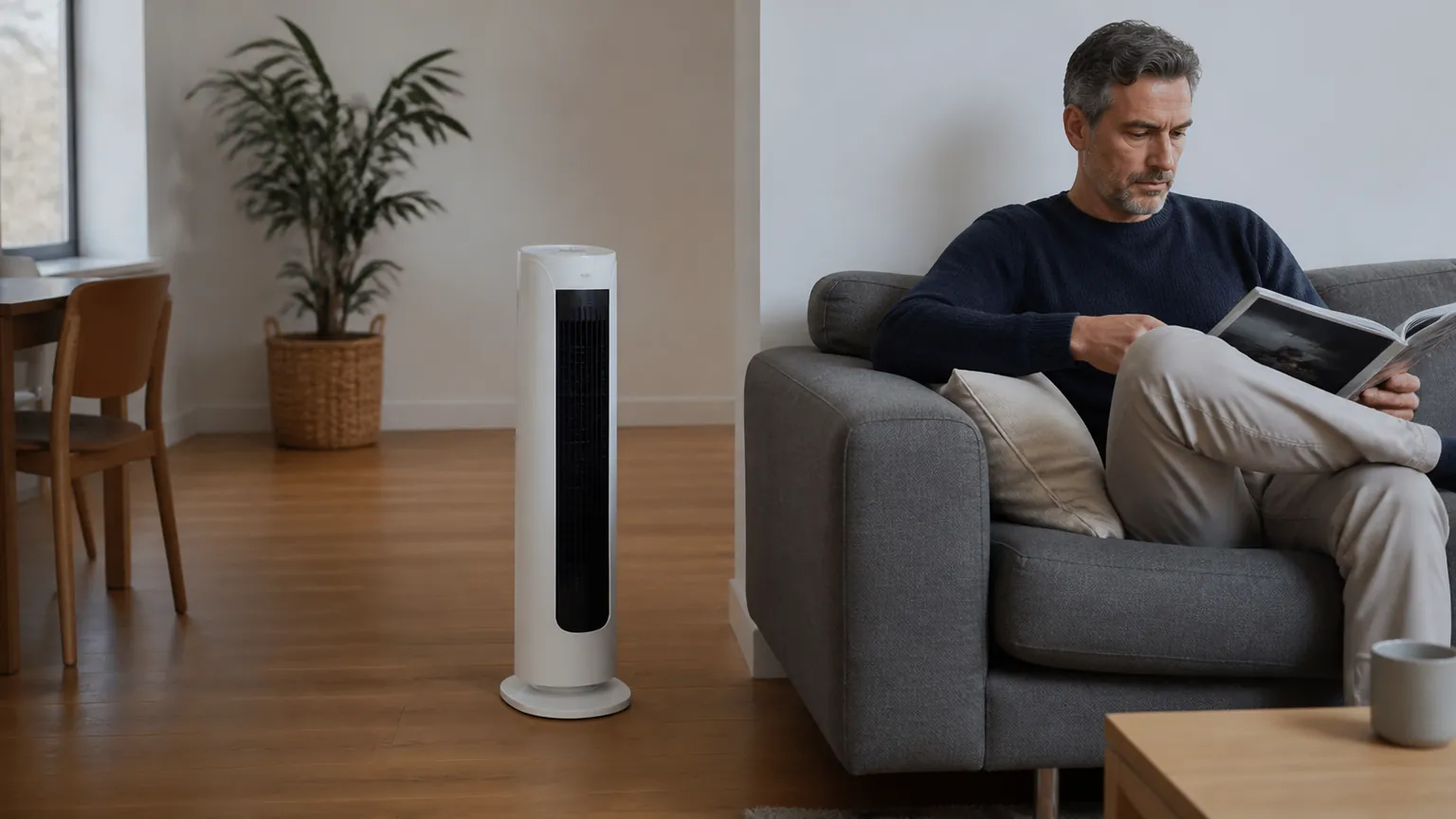
A fan heater combo sounds like the sensible answer to a cluttered home: one slim tower that blows cool air in summer and warm air in winter, so you pack away the box fan and the space heater for good. Manufacturers lean hard on that year-round convenience, and the early-season sales make the price look tempting. But "does two jobs" and "does two jobs well" are not the same thing. Before you hand over the money, it helps to work out what you are really getting, what it costs to run, and whether two cheaper single-purpose appliances would serve you better. Let's go through it calmly, with real numbers.
What a cool-and-heat tower actually is
Most of these towers are a tall, narrow fan with a heating element added. In cooling mode they move air around the room the way any fan does. They do not lower the actual temperature of the air the way an air conditioner does; they just make you feel cooler by increasing airflow across your skin. That distinction matters. If you expected a tower to chill a hot room on a 35°C (95°F) afternoon, you will be disappointed, because it cannot.
In heating mode, a resistive element warms the air as the fan pushes it out. This is the same basic technology as a cheap plug-in space heater. It is good for taking the chill off a small-to-medium room quickly, but it is not an efficient way to heat a large or draughty space for hours on end.
So a combo tower is best understood as a fan with a built-in heater, not an air conditioner with a heat pump. Some premium bladeless models add air purification and app control, which pushes the price up considerably without changing the core physics.
Where the voltage and plugs differ
Heating draws a lot of current, and this is one area where your country matters. In the US and Canada, standard outlets run at about 120 volts, so a plug-in heater is typically capped around 1,500 watts. In the UK, Australia and most of Europe, mains runs at roughly 230 to 240 volts, and heaters are commonly 2,000 to 2,400 watts. A higher-wattage heater warms a room faster but also costs more per hour to run. Whatever the country, plug a heater straight into a wall outlet, never into a thin extension lead or a power strip, because the current can overheat cheap cabling.
The running costs, in plain numbers
Cooling is cheap. Heating is where your electricity bill feels it. A fan on its own usually draws somewhere between 30 and 70 watts, so running it is close to free. The heater is a different animal entirely.
Here is the sum for a 1,500-watt heater, which is 1.5 kilowatts. Run it for one hour and you use 1.5 kWh. Multiply by your electricity rate:
- US: 1.5 kWh × 17 cents = about 26 cents per hour
- UK: 1.5 kWh × 25p = about 38p per hour
- Australia: 1.5 kWh × 30 cents = about 45 Australian cents per hour
For a higher-wattage 2,400-watt (2.4 kW) model common in the UK and Australia, the heating cost rises proportionally: in the UK that is 2.4 × 25p = about 60p per hour, and in Australia 2.4 × 30 cents = about 72 Australian cents per hour. Run that four hours an evening across a cold month and the numbers add up quickly. Electricity prices vary a lot by country and by your own tariff, so swap in the rate printed on your bill for an accurate figure.
The key point is this: a combo tower and a basic space heater of the same wattage cost the same to heat a room. The "eco" or "smart" label does not change the physics; a 1,500-watt element produces 1,500 watts of heat regardless of the brand on the front. If you want to understand why cheaper models often heat a room just as effectively, our guide to electric space heater costs and whether 'eco' models are worth it walks through the same math in more depth.
Combo tower versus two separate appliances
This is the real question. A decent combo tower commonly sells for around $80 to $200, with premium bladeless and purifying models stretching to $400 or more (roughly £300 or A$600). A simple pedestal or tower fan runs around $20 to $60, and a basic plug-in space heater around $25 to $60. So you can often buy both single-purpose appliances for less than one mid-range combo.
| Factor | Combo tower | Separate fan + heater |
|---|---|---|
| Typical price | $80 to $200+ | $45 to $120 for both |
| Running cost (heating) | Same per watt | Same per watt |
| Storage space | One unit, year-round | Two units; store one each season |
| If one function breaks | Whole unit is affected | Replace only the failed item |
| Cooling power | Airflow only, no chilling | Airflow only, no chilling |
| Features (app, purify) | Often available | Rarely |
The honest trade-off: a combo wins on tidiness and saves you storing a second box in the garage. Separate appliances usually win on price and on repairability, because if the heater element fails you still have a working fan, and vice versa. There is no energy saving either way, since both heat and cool using the same underlying methods.
Safety, noise and the small print
Heaters deserve respect. Keep any heating appliance at least a metre (about three feet) from curtains, bedding and furniture. Look for a model with tip-over cut-off and overheat protection, which are standard on reputable units and genuinely useful if you have children or pets who might knock it over. Never leave a heater running unattended overnight, and never drape clothes over it to dry.
Noise is worth checking too. A fan on high can reach 50 to 60 decibels, which is noticeable if you want to sleep near it. If your real goal is a quieter bedroom, a dedicated quiet fan or a white noise machine versus a sleep app may serve you better than a combo tower running at full tilt.
- Plug directly into a wall outlet, not an extension cord or multi-plug strip.
- Check for tip-over and overheat cut-offs before buying.
- Keep a clear gap around the unit and away from soft furnishings.
- Switch it off at the wall when you leave the room for the night.
- If the plug or cable feels hot to the touch, stop using it and have it checked.
Who a combo tower genuinely suits
A fan heater combo makes the most sense if you are tight on storage, want one neat appliance for a single room such as a home office or bedroom, and value gentle warmth and airflow over raw power. The app-controlled, purifying models appeal to people who want a tidy all-in-one and are happy to pay for it, much like the convenience premium on a temperature-control electric kettle. If you mainly want strong heating for a large living room, a dedicated heater or your central heating will do the job better. And if you want to actually cool a hot room, no fan of any kind can do that; you need an air conditioner or a heat-pump unit. Buying a combo for its cooling and expecting cold air is the single most common disappointment people report.
The short version
- A fan heater combo is a fan with a built-in heater; it moves air but does not chill a room.
- Heating costs the same per watt whatever the brand: a 1,500-watt unit is about 26 US cents, 38p or 45 Australian cents an hour.
- Two separate appliances often cost less together and are easier to repair, but a combo saves storage space.
- Look for tip-over and overheat cut-offs, and plug straight into the wall, never an extension lead.
- Worth it if you want one tidy unit for a single room; skip it if you expect real cooling or heavy heating.
Emma Clarke
Home & Kitchen writer · Melbourne
Emma covers home and kitchen gadgets, from smart plugs to air fryers. She focuses on what things really cost to buy and run at home, and on the features that matter once the novelty wears off.
Keep reading

Replacement Battery Guide: Repair or Replace Your Device?
A fading phone, drill or doorbell doesn't always mean buying new. Here's how to work out when a fresh battery pays off and when it quietly doesn't.
Ring Video Doorbell Review: Battery 2K Plus, Honestly Judged
The Ring Battery Doorbell 2K Plus brings sharper square video and a swappable battery, but owners say the real cost is the subscription you need for saved footage.

Heated Blanket Cost per Hour vs a Space Heater
We work out what a heated throw really costs per hour, compare it to running a space heater, and show when heating just yourself saves real money.
Comments
No comments yet. Share your experience or ask a question.