Smart Sleep Masks: Do They Improve Your Sleep?
From simple blackout fabric to AI masks that claim to track your sleep, here's what a sleep mask can really do and who tends to benefit.

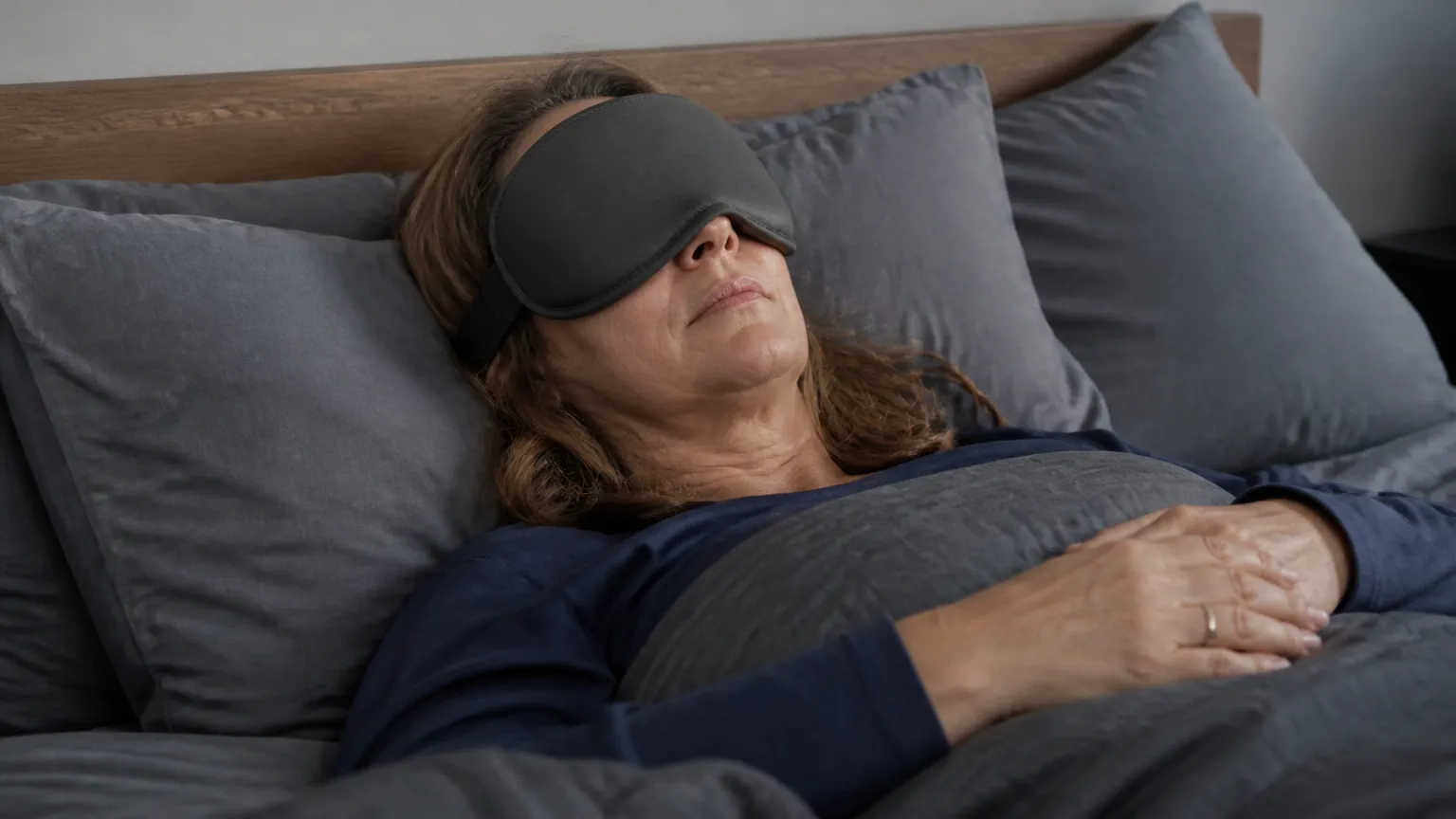
Search interest in the humble sleep mask has climbed again, pushed along by darker winter mornings and the "sleepmaxxing" trend, where people stack gadgets and habits in pursuit of perfect rest. A sleep mask is one of the cheapest things in that toolkit, and increasingly one of the most high-tech: alongside the $10 strip of padded fabric you now find masks with Bluetooth speakers, heated pads, warming eye therapy, and even "AI" that claims to read your sleep and nudge you awake at the right moment. This guide separates what these masks actually do from what the marketing claims, looks at the evidence honestly, and helps you work out whether any of them is worth your money.
What a sleep mask actually does
At its core, a sleep mask does one simple job: it blocks light from reaching your eyes. That matters because light is the strongest signal your body uses to set its internal clock. Even with your eyes closed, light leaking in at the edges can suppress melatonin, the hormone that helps you feel sleepy. Blocking that light is the mechanism behind every mask, from the basic to the expensive.
Light is measured in lux. A dim, well-prepared bedroom might sit under 5 lux, while a streetlight through thin curtains or a partner's screen can push the light near your face well above that. A good blackout mask can bring the light reaching your eyes close to zero, which is something curtains alone often can't manage, especially if you sleep during the day or in summer when it's light by 5 a.m.
The two broad categories
- Light-blocking (passive) masks. Just fabric, foam, or molded cups with a strap. No battery, no electronics. Prices run from around $8 to $40. The better ones use contoured eye cups so there's no pressure on your eyelids and a little room to blink.
- Smart or "active" masks. These add electronics: built-in flat speakers for audio, gentle heating pads, vibration, light-based wake-up features, or sensors that claim to track sleep stages. Prices typically run from around $60 to $350, and a few specialist models go higher.
What the "smart" features really offer
The word "smart" covers a wide range of features, and they're not equally useful. It helps to look at them one at a time.
Audio masks
Many smart masks are really a blackout mask with thin speakers over the ears, letting you play white noise, sleep stories, or guided breathing without wearing earbuds in bed. If you already fall asleep to audio and find earbuds uncomfortable, this is a genuine convenience. The sound quality is modest, and you're relying on the battery lasting the night.
Heated and warming masks
Some masks apply gentle warmth, usually around 40°C to 45°C (104°F to 113°F), marketed for relaxation or dry, tired eyes. Warmth can feel soothing and may help with certain eye-comfort issues, but that is a comfort claim, not proof of better sleep. If you have an eye condition, treat these as a comfort aid and check with a pharmacist or doctor rather than a product page.
AI and sleep tracking
This is where marketing gets ahead of the evidence. A mask sitting on your face can, in principle, detect eye movement or small signals, and some claim to use this to track sleep stages or time a "smart" wake-up. In practice, independent validation of mask-based tracking is thin, and accuracy claims are mostly the manufacturers' own. If your main goal is data, a wrist or finger device is better studied. Our comparison of the best sleep tracker: smart ring vs smartwatch covers that ground, and if you're weighing a ring specifically, see our look at subscription-free smart rings.
What the evidence shows
The honest summary is that the strongest evidence supports the simplest feature: blocking light. Darkness is well established as helpful for sleep, and a mask is a reliable way to achieve it when you can't control the room. Studies in settings like hospital wards, where light and noise are hard to avoid, have commonly reported that eye masks (often alongside earplugs) are associated with better-reported sleep. That's a reasonable real-world signal, even if home conditions differ.
For the added features, the picture is mixed to thin. Audio can help people who already use it. Warmth is a comfort claim. Tracking and AI wake-up features lack strong independent evidence, and you should treat accuracy figures as manufacturer claims unless an independent source backs them up. None of this means smart masks are useless; it means you're often paying extra for comfort and convenience rather than a proven sleep boost.
Comparing the main types
The table below compares the broad categories on the things that actually affect your decision. Prices are approximate and vary by region and retailer.
| Type | Typical price | Battery? | Best for | Main limitation |
|---|---|---|---|---|
| Basic flat fabric mask | Around $8 to $20 | No | Travel, occasional use | Can press on eyelids; light may leak at the nose |
| Contoured blackout mask | Around $15 to $40 | No | Best overall light-blocking for most people | Bulkier; strap can feel warm |
| Audio mask | Around $60 to $120 | Yes (rechargeable) | People who sleep to sound and dislike earbuds | Modest sound; nightly charging |
| Heated / warming mask | Around $40 to $150 | Yes or USB-powered | Relaxation, tired or dry eyes | Comfort benefit only; not proven to improve sleep |
| AI / tracking mask | Around $150 to $350 | Yes | Gadget-minded users curious about features | Accuracy claims largely unverified independently |
Running costs, charging and safety
A passive fabric mask costs nothing to run. A smart mask has a small rechargeable battery, usually charged over USB, and the electricity cost is trivial. As a worked example, suppose a mask has a 500 mAh battery at 3.7 volts. That's about 0.00185 kWh per full charge (0.5 Ah times 3.7 V = 1.85 Wh). Even charging it fully every night for a year uses roughly 0.68 kWh.
At about 17 US cents per kWh that's around 12 cents a year; at about 25p in the UK, roughly 17p; at around 30 Australian cents, about A$0.20. In other words, charging is a rounding error. Electricity prices differ by country, but at these tiny amounts the difference doesn't matter. If you're curious how small always-on devices add up more generally, our guide on whether smart plugs actually save money walks through the method.
A few practical safety points are worth keeping in mind:
- Heat. Warming masks should feel comfortably warm, not hot. If a mask ever feels too hot or smells of burning, stop using it and don't charge it again. Don't fall asleep with a heated mask that has no automatic shut-off.
- Batteries. These are lithium cells. Charge on a hard surface, not buried in bedding, and don't use a mask with a swollen pad or damaged cable. Use the supplied charger or a reputable USB adapter.
- Plugs and voltage. USB charging is the same the world over at 5 volts, so a smart mask works fine whether your mains is 120 V (US) or 230 to 240 V (UK and Australia). You only need the right plug adapter for the wall, and any decent USB charger handles both.
- Children. Masks with straps and small parts aren't suitable for young children. Keep charging cables away from where a child sleeps.
Who a sleep mask actually helps
A sleep mask is most useful when you can't make the room dark enough by other means. That includes shift workers sleeping during the day, light sleepers whose partner reads or scrolls in bed, frequent travelers, and anyone with thin curtains facing a streetlight. For these situations, even a basic contoured blackout mask can make a real difference, and it's a low-risk, low-cost thing to try.
If your sleep problems are mainly about room temperature or racing thoughts, a mask is only part of the answer. Keeping a bedroom around 16°C to 19°C (60°F to 66°F) suits most people, and a smart thermostat can help you hold that overnight. And if what you really want is reliable data about your nights rather than darkness, a wearable is the better tool; our Oura Ring review is a realistic look at what that kind of tracking does and doesn't deliver.
A sleep mask won't fix insomnia, sleep apnea, or chronic poor sleep on its own. If you regularly struggle despite a dark, cool, quiet room, that's worth raising with a doctor rather than buying another gadget. Think of a mask as removing one obstacle, light, rather than as a treatment.
The short version
- The proven benefit of any sleep mask is blocking light, and a simple contoured blackout mask does that well for around $15 to $40.
- Smart features like audio and warmth add comfort and convenience, but there's little strong, independent evidence they improve sleep beyond darkness.
- Treat AI and sleep-tracking claims on masks as manufacturer claims; a well-studied ring or watch is better if you mainly want data.
- Running costs are negligible, and USB charging works on any country's mains with the right plug adapter.
- Masks help most with uncontrollable light; they won't fix insomnia or apnea, so see a doctor if poor sleep persists.
Tom Ashworth
Sleep, Health Tech & Travel writer · Manchester
Tom writes about sleep and health tech, travel gadgets and outdoor gear. He looks past spec sheets to how a gadget fits into everyday life, and he is wary of health claims that go beyond the evidence.
Keep reading
Garmin Venu 3 Review: Battery King, Smartwatch Compromise
Our Garmin Venu 3 review weighs multi-day battery and solid health tracking against a limited app store and some post-update niggles owners report.
Fitbit Inspire 3 Review: Light, Honest, Subscription-Gated
A level-headed look at the Fitbit Inspire 3, pulling together the maker's specs and what owners actually report after living with it day and night.
Fitbit Charge 6 Review: Honest Look at the Google-Powered Band
An honest look at the Fitbit Charge 6: strong heart-rate accuracy and comfort, but wobbly GPS and a paywall that frustrates owners.
Comments
No comments yet. Share your experience or ask a question.